


CRM Software Development: Build vs Buy for Your Business (2026 Guide)
Choosing a CRM is easy. Choosing how to get one is the hard part. Every growing business eventually hits the same fork in the road: buy a ready-made platform like Salesforce or HubSpot, or invest in custom CRM software development built around your exact workflows. Pick wrong, and you either pay for features you never use or sink budget into a system you didn’t need. This guide breaks down the build vs buy CRM decision the way a seasoned software development company in the USA would explain it to you, minus the sales pitch. You’ll get honest pros and cons, real 2026 cost ranges, a clear decision framework, and answers to the questions buyers actually ask before they commit.
What Is CRM Software Development?
CRM software development is the process of designing, building, and maintaining a system that manages your customer relationships, sales pipeline, and customer data in one place. At its simplest, a CRM (customer relationship management software) tracks who your customers are, what they’ve bought, and where they sit in your sales funnel.
But modern CRM platforms do far more than store contacts. They automate follow-ups, score leads, forecast revenue, sync with your email and billing tools, and give your team a single source of truth. Whether you buy or build, the goal is the same: turn scattered customer data into predictable revenue.
The Two Paths: Build vs Buy CRM
There are really only two routes to a working CRM:
- Buy (off-the-shelf CRM software): Subscribe to an existing SaaS CRM like Salesforce, HubSpot, Zoho, or Pipedrive. You configure it, add your data, and pay per user every month.
- Build (custom CRM development): Partner with a CRM development company to design a system from scratch, tailored to your processes, your integrations, and your data ownership requirements.
A third hybrid path also exists: customizing an off-the-shelf platform with add-ons and code. It sits somewhere in the middle on cost and flexibility. We’ll cover where each option wins below. For a deeper side-by-side, see our full breakdown of custom vs off-the-shelf CRM.
Why the Build vs Buy CRM Decision Matters in 2026
This isn’t a small software choice. It shapes your budget, your data security, and your competitive edge for years.
The stakes are rising because the market is exploding. The global CRM market is set to reach roughly $126.2 billion in 2026 and is expected to grow to about $254.3 billion by 2032, at a CAGR of around 12.4%. Over 91% of companies with more than 10 employees now use CRM software. In short, a CRM is no longer optional infrastructure.
The payoff is real, too. Businesses earn about $8.71 in return for every $1 spent on CRM, and CRM use boosts customer retention by roughly 27%. But here’s the catch nobody advertises: CRM implementation failure rates sit around 30% in 2026, with enterprise projects failing more often (about 38%) than SMB deployments (around 22%). Whether you build or buy, execution decides whether you land in the winning column.
That’s exactly why the build vs buy question deserves real thought instead of a gut decision.
Off-the-Shelf CRM Software: The “Buy” Option
Buying means subscribing to a third-party CRM platform that’s already built, tested, and used by thousands of companies.
Pros of Buying an Off-the-Shelf CRM
- Fast setup. You can be live in days or weeks, not months.
- Lower upfront cost. No large development invoice — you pay a monthly subscription instead.
- Vendor support and updates. Security patches, new features, and uptime are the vendor’s job.
- Proven reliability. Millions of users have already stress-tested the software.
- Rich ecosystems. Marketplaces of pre-built integrations and apps are ready to plug in.
Cons of Buying an Off-the-Shelf CRM
- Limited customization. You bend your process to fit the software, not the other way around.
- Feature bloat. You pay for modules you’ll never touch.
- Per-user pricing that scales painfully. Off-the-shelf CRMs typically run $25–$165 per user per month, and that bill grows every time you hire.
- Vendor lock-in. Migrating your data out later is rarely simple.
- No competitive advantage. Your rivals can buy the exact same tool.
Buying is the smart default for many small teams and standard sales motions. The friction shows up when your workflow is unusual, your team grows large, or your data can’t leave your control.
Custom CRM Development: The “Build” Option
Building means partnering with a software development company to create a CRM system engineered around your business — your sales pipeline, your data model, your integrations, your compliance rules.
Pros of Building a Custom CRM
- Perfect workflow fit. The software mirrors how your team actually works.
- Full data ownership. Your customer data lives where you decide, with no third-party dependency.
- No per-seat tax. A custom build is largely a one-time investment, so cost doesn’t balloon as you add users.
- Scalability on your terms. You control the architecture, the tech stack, and the roadmap.
- Deeper integrations. Connect to legacy systems, ERPs, and proprietary tools that off-the-shelf platforms can’t reach. (See our API integration services guide.)
- Competitive advantage. A CRM built around your unique process is something competitors can’t just buy.
Cons of Building a Custom CRM
- Higher upfront cost. You’re funding real development work.
- Longer timeline. Expect months, not days, to go live.
- You own maintenance. Updates, security, and support are your responsibility (or your development partner’s).
- Requires the right team. A weak build is worse than a good subscription. Choosing an experienced software development company in the USA is critical.
Building shines when your process is a genuine differentiator, when subscription costs are spiraling, or when data ownership and compliance are non-negotiable. If you’re seeing the signs you need custom software development, a tailored CRM is often the natural next step.
Build vs Buy CRM: Side-by-Side Comparison
| Factor | Buy (Off-the-Shelf) | Build (Custom CRM) |
|---|---|---|
| Upfront cost | Low | Higher |
| Ongoing cost | Per-user, monthly (scales up) | Maintenance only |
| Time to launch | Days to weeks | Weeks to months |
| Customization | Limited | Unlimited |
| Data ownership | Vendor-controlled | Fully yours |
| Scalability | Priced per seat | Architected for growth |
| Integrations | Marketplace-limited | Built to spec |
| Competitive edge | None (anyone can buy it) | Strong differentiator |
| Best for | Standard workflows, small teams | Unique processes, scaling teams |
How Much Does Custom CRM Development Cost in the USA?
This is the question everyone Googles, so let’s be direct. Custom CRM software development typically ranges from about $30,000 to over $250,000, depending on features, integrations, and customization requirements. Here’s a realistic breakdown for 2026:
- Basic CRM / MVP — $20,000–$40,000. Contact management, deals, and simple pipelines. Perfect for teams moving off spreadsheets. A lean MVP-first approach keeps this tier affordable.
- Mid-range custom CRM — $50,000–$120,000. Workflow automation, reporting dashboards, and multiple integrations.
- Enterprise-grade CRM — $150,000+. AI features, advanced analytics, deep enterprise integrations, and strict compliance.
Key cost drivers to budget for:
- Third-party integrations: roughly $3,000–$25,000+ per system (ERP, billing, marketing tools).
- Data migration: $3,000–$15,000, depending on volume and data quality.
- AI/ML features: predictive lead scoring and GenAI can add $20,000–$80,000+.
- Ongoing maintenance: plan for 15–25% of build cost per year.
- Developer location: North American rates run $100–$200/hour, while nearshore and offshore teams cost less — a reason many businesses outsource CRM development strategically.
For a fuller picture across project types, see our guide to custom software development cost in the USA.
Total Cost of Ownership (TCO): The Number That Actually Matters
Sticker price lies. The real comparison is total cost of ownership over three to five years.
A $150/user/month CRM looks cheap for a 5-person team — about $9,000 a year. Scale that to 40 users and you’re paying $72,000 every single year, forever, with the bill climbing as you grow. Over five years, that’s $360,000+ in subscriptions you’ll never own.
A custom CRM flips the math. It’s a larger upfront investment, but a one-time one. For teams of roughly 20+ users with specific workflows, custom development often becomes more cost-effective within 2–3 years — and after break-even, you’re no longer paying rent on your own customer data.
The lesson: run the TCO math before you decide, not the monthly-price math.
When Should You Build a Custom CRM?
Building makes sense when:
- Your sales or service process is unusual and off-the-shelf tools force awkward workarounds.
- You have 20+ users and per-seat pricing is eating your margin.
- Data ownership, security, or compliance (GDPR, HIPAA) is mission-critical.
- You need deep integration with legacy systems or proprietary tools.
- Your CRM is a genuine competitive advantage, not just admin software.
When Should You Buy an Off-the-Shelf CRM?
Buying makes sense when:
- Your workflow is fairly standard and a proven platform covers 80%+ of your needs.
- You’re a small team that needs to launch fast on a tight budget.
- You don’t have the appetite to manage software maintenance.
- Your requirements are likely to stay stable as you grow.
Not sure where you land? A short consultation with our team can map your workflow to the right path — get in touch here.
Custom CRM Development vs Salesforce, HubSpot, and Zoho
The big three are excellent products — but they’re products, not custom fits.
- Salesforce: Powerful and endlessly configurable, but complex and expensive. Heavy customization often requires specialist developers anyway — at which point a custom build starts looking competitive.
- HubSpot: Beautifully easy for marketing and sales alignment, but costs climb sharply as you add contacts and premium features.
- Zoho: Affordable and feature-rich, ideal for SMBs, though very unique workflows can hit its limits.
The honest takeaway: if these platforms fit your process, buy one and move on. Custom CRM development wins when you’ve outgrown their assumptions, when subscription creep hurts, or when you need something the market simply doesn’t sell.
The Custom CRM Development Process, Step by Step
A trustworthy CRM development company follows a disciplined process. Here’s what a healthy build looks like:
- Discovery & requirements. Map your workflows, data model, and integration needs. This is where a solid software requirements document pays off.
- Architecture & tech stack selection. Choose the right foundation for scalability, security, and speed, including cloud vs on-premise deployment.
- UX/UI design. Design for user adoption — a CRM nobody wants to use is wasted money.
- MVP development. Ship a working core first, then iterate. Learn more about the 90-day MVP approach.
- Integration & data migration. Connect your tools and move existing data cleanly.
- Testing & QA. Rigorous software testing before launch, not after.
- Deployment, training & support. Roll out, train the team, and maintain the system long-term.
Most teams run this on an agile cadence for flexibility — here’s how agile compares to waterfall, and what a realistic development timeline looks like.
Key Features Every Modern CRM Should Have
Whether you build or buy, insist on these:
- Contact and customer data management — a clean single source of truth.
- Sales pipeline management — visual stages and deal tracking.
- Workflow and business process automation — kill the manual busywork.
- Lead management and scoring — prioritize the deals worth chasing.
- Reporting and analytics — forecast revenue with confidence.
- API integration — connect email, billing, ERP, and marketing tools.
- Mobile access — essential for field sales teams.
- AI features — predictive scoring, automated summaries, and smart suggestions are fast becoming standard.
Data Security & Compliance: GDPR, HIPAA, and Beyond
Your CRM holds your most sensitive asset: customer data. Security isn’t a feature you bolt on later.
Off-the-shelf platforms handle compliance broadly, but you inherit their model and their risks. A custom CRM lets you architect security to your exact requirements — encryption standards, access controls, audit logs, and data residency.
If you operate in regulated industries, this is decisive. Healthcare CRMs must meet HIPAA standards for protected health information, and any business serving EU customers must respect GDPR rules on data privacy. Custom development gives you full control over how compliance is built in, rather than hoping a vendor’s defaults cover you.
Why Choose Leads 360 LLC for CRM Software Development
Building a CRM is only as good as the team behind it. Here’s why businesses across the USA trust Leads 360 LLC for CRM software development services:
- End-to-end expertise. From discovery to deployment, we handle strategy, custom software development, integration, and support under one roof.
- Business-first thinking. We start with your workflow and ROI, not with code. You get a system that earns its cost.
- Flexible engagement models. Dedicated teams, staff augmentation, or full project delivery — whatever fits your stage.
- USA-based partnership with cost-smart delivery. Enterprise-grade quality without enterprise-only pricing.
- Transparent process. Clear timelines, honest cost estimates, and no vendor lock-in on your own data.
Explore our full range of advanced software development services at Leads 360 LLC to see how we can build a CRM around your business.
How to Choose a CRM Development Company
If you decide to build, vet your partner carefully. Ask:
- Do they have relevant CRM and integration experience? Request case studies.
- Is the process transparent? You should see clear milestones and pricing.
- Who owns the code and data? The answer must be you.
- How do they handle security and compliance?
- What does post-launch support look like?
- Can they scale with you?
Our detailed checklist on how to choose a software development company in the USA walks through each of these in depth.
Real-World Example: When Building Beat Buying
Consider a mid-sized B2B services firm running 35 sales and support reps on an off-the-shelf CRM at roughly $120 per user per month — about $50,000 a year in subscriptions, climbing with every new hire. Worse, their unusual multi-stage approval workflow needed constant manual workarounds the platform couldn’t support.
They commissioned a custom CRM for around $110,000. It automated their approval workflow, integrated directly with their billing system, and removed the per-seat tax entirely. By year two, the build had paid for itself against subscription savings alone — and by year three they were operating on software that genuinely fit, with data they fully owned. Off-the-shelf would have kept billing them forever for a worse fit.
The point isn’t that building always wins. It’s that TCO plus workflow fit — not sticker price — reveals the right answer.
Frequently Asked Questions (FAQs)
Is it cheaper to build or buy a CRM? In the short term, buying is cheaper because you avoid upfront development costs. Long term, building is often cheaper for larger teams — a custom CRM has no per-user fees, so it typically becomes more cost-effective than a subscription within 2–3 years for teams of 20+ users.
How much does custom CRM development cost in the USA? Custom CRM development generally costs between $30,000 and $250,000+ in 2026. A basic MVP runs $20,000–$40,000, a mid-range system $50,000–$120,000, and enterprise-grade builds start around $150,000, depending on features, AI, and integrations.
How long does it take to build a custom CRM? A basic custom CRM (MVP) takes about 2–4 months. Mid-range and enterprise systems typically take 4–9 months or more, depending on complexity, integrations, and testing requirements.
Is Salesforce better than a custom CRM? Salesforce is better if your process fits its model and you want fast deployment with vendor support. A custom CRM is better when you need a perfect workflow fit, full data ownership, no per-seat costs at scale, or a competitive advantage the market can’t sell.
Can a small business build its own CRM? Yes. Small businesses can start with an affordable custom MVP ($15,000–$40,000) that covers core needs, then expand over time. Many, however, are better served by an off-the-shelf CRM until their workflows become unique enough to justify a build.
What are the risks of building a CRM in-house? The main risks are underestimating cost and timeline, choosing the wrong tech stack, weak security, low user adoption, and ongoing maintenance burden. These risks shrink dramatically when you work with an experienced CRM development company.
Conclusion: Make the Decision With Confidence
There’s no universal winner in the build vs buy CRM debate — only the right fit for your business. Buy when your workflow is standard, your team is lean, and speed matters most. Build when your process is a differentiator, your subscription costs are climbing, or data ownership and compliance are non-negotiable. And always run the total cost of ownership math over three to five years before you commit.
The one thing you shouldn’t do is guess. A CRM shapes your revenue engine for years, and the smartest first move is an honest conversation about your goals, workflows, and budget.
Ready to decide with clarity? Book a free CRM consultation with Leads 360 LLC and let our experts map the right build-vs-buy strategy for your business — and, if building is the answer, deliver a custom CRM that pays for itself.

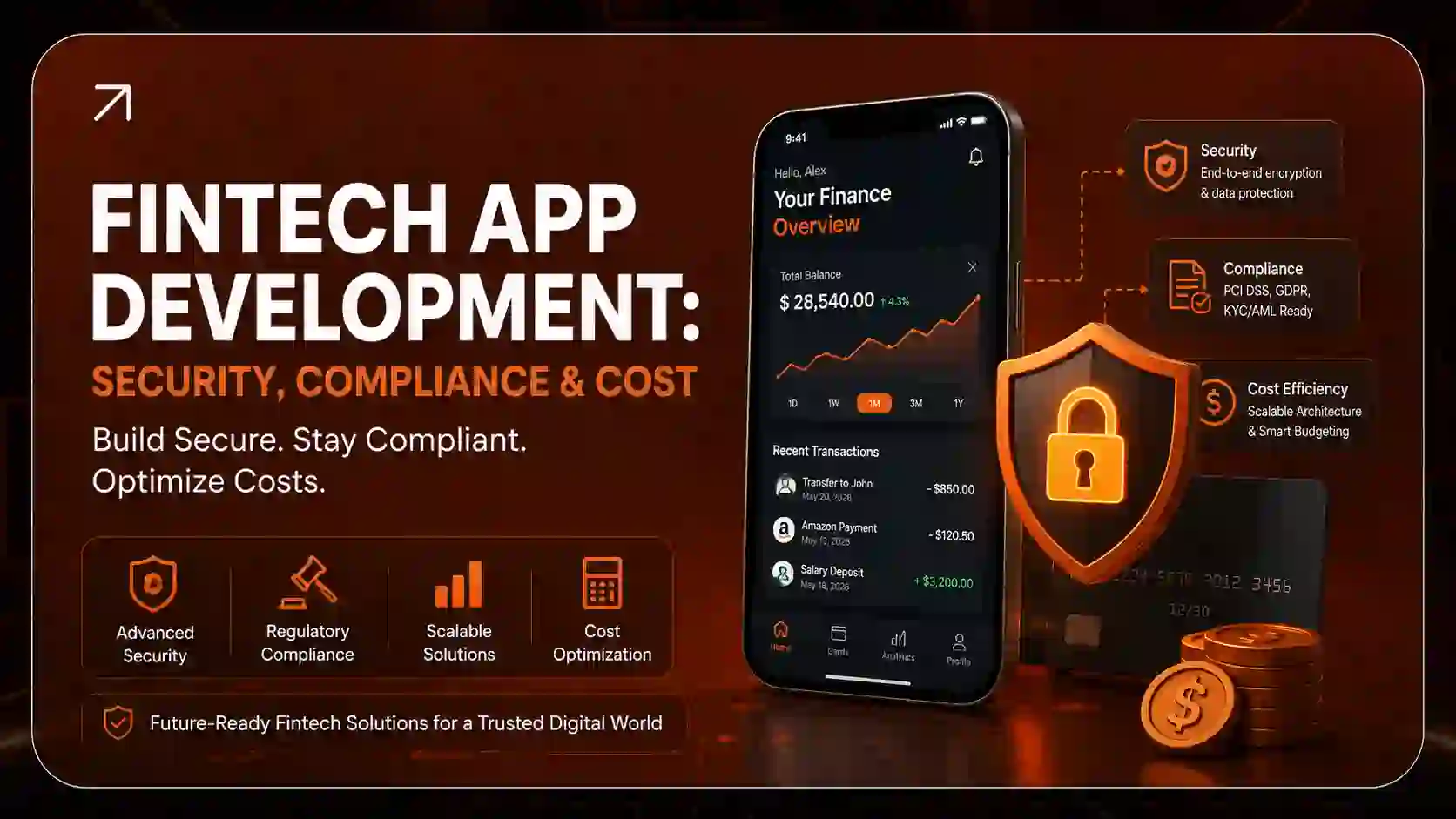
[…] shows up across categories, which is why the custom vs off-the-shelf CRM comparison and the CRM software development build vs buy guide are worth reading even if CRM isn’t your use case. The decision framework transfers […]