


Custom Android App Development: A Business Owner’s Guide
Most business owners don’t wake up wanting an app. They wake up wanting fewer no-shows, faster reorders, cleaner field data, or a way to keep customers close without paying a marketplace a cut of every sale. A custom Android app is simply the tool that makes those things happen on the device your customers already carry.
This guide is written for the person signing the check, not the person writing the code. You’ll learn what custom Android app development actually involves, how the process works stage by stage, what it costs in the US market, how to choose between native and cross-platform, and how to pick a development partner without getting burned. No jargon walls, no sales fluff.
What Is Custom Android App Development?
Custom Android app development is the process of designing, building, testing, and launching an Android application built specifically around one business’s workflows, customers, and data instead of using a pre-made template or off-the-shelf product.
A template app gives you someone else’s assumptions with your logo on top. A custom app starts with your booking flow, your inventory rules, your pricing logic, and your existing systems, then builds an interface and a backend around them.
Custom Android development usually includes:
- Discovery and requirements gathering
- UI/UX design, wireframing, and prototyping
- Native development in Kotlin or Java (or a cross-platform framework)
- Backend development, database design, and API integration
- Security, testing, and QA
- Google Play Store deployment
- Post-launch app support and iteration
The scale matters more than the label. A single-purpose internal tool for 40 warehouse staff is custom development. So is a consumer marketplace with payments, chat, and live tracking. They just sit at opposite ends of the budget range.
Why Android? The Business Case Before the Build
Android runs on roughly seven out of ten smartphones worldwide, according to StatCounter’s global platform data. In the United States the split is closer to even with iOS, but Android still dominates in price-sensitive segments, field workforces, logistics, delivery, healthcare support staff, and most of Latin America, Asia, and Africa.
That leads to a simple rule of thumb:
If your users are consumers in the US premium market, iOS-first can make sense. If your users are workers, drivers, technicians, patients, students, or international customers, Android-first almost always wins.
Android also gives you flexibility Apple doesn’t. You can sideload internal enterprise apps without going through public review, distribute through Managed Google Play, run kiosk-mode devices, integrate deeply with hardware like scanners and printers, and ship updates on your own schedule.
Real business outcomes owners actually buy
- Lower cost per transaction. Every order that moves from a phone call to an app is staff time you get back.
- Escape from marketplace fees. Restaurants, salons, and service businesses paying 15–30% commissions often break even on an app within a year.
- Better data. Your own app tells you what people browse, abandon, and repeat-buy. No third party owns that.
- Retention through push notifications. Owned, permission-based, and far cheaper than paid re-acquisition.
- Offline capability. Field crews in basements, rural roads, and warehouses can keep working, then sync later. A mobile website can’t do that reliably.
If you’re still weighing whether software is the right investment at all, the breakdown in signs you need custom software development is a useful gut check before you spend a dollar.
Custom App vs Off-the-Shelf: How to Decide
Off-the-shelf software is cheaper on day one and more expensive on day 500. Custom is the reverse. The honest deciding factor is whether your process is a competitive advantage or just plumbing.
Choose off-the-shelf when:
- Your process is standard (basic invoicing, generic scheduling, simple e-commerce)
- You need something live in weeks, not months
- You have fewer than a few hundred users and no unusual rules
Choose custom Android app development when:
- You’re paying for five tools that don’t talk to each other
- Staff maintain spreadsheets to patch gaps in your software
- Per-seat licensing costs rise faster than your revenue
- Your differentiator lives inside the workflow itself
- You need to own the data, the roadmap, and the integrations
The same trade-off shows up across categories, which is why the custom vs off-the-shelf CRM comparison and the CRM software development build vs buy guide are worth reading even if CRM isn’t your use case. The decision framework transfers cleanly.
Native Android vs Cross-Platform vs PWA
This is the technical decision business owners get dragged into most often, so here’s the plain-English version.
Native Android (Kotlin or Java)
Built with the Android SDK using Kotlin, which Google has officially recommended as the preferred language for Android since 2019. You get the best performance, full access to camera, Bluetooth, sensors, background services, and NFC, plus same-day support for new OS features.
Best for: apps with heavy graphics, real-time location, complex offline sync, hardware integration, or long expected lifespans.
Cross-Platform (Flutter, React Native, Kotlin Multiplatform)
One codebase produces Android and iOS builds. You typically save 25–40% versus building both platforms natively, and you ship to two stores at once. The trade-offs are larger app size, occasional lag when Android or iOS releases new APIs, and more friction on deeply native features.
Best for: startups needing both platforms fast, content-and-forms apps, MVPs, and marketplaces where the UI is mostly standard components.
Progressive Web App (PWA)
A website that installs to the home screen. Cheapest option, no store review, instant updates. Weaker push notification support on some devices, no Play Store discovery, limited hardware access, and shakier offline behavior.
Best for: validating demand before committing budget, or content-first products.
Practical guidance: if you only need Android, go native Kotlin. If you need Android and iOS on a startup budget, go cross-platform. If you’re not sure people want the thing at all, build a PWA or an MVP first and let usage decide.
For teams choosing the delivery approach as well as the tech, agile vs waterfall development explains why almost every serious app project runs in sprints rather than one long build.
The Android App Development Process, Stage by Stage
A credible development partner should be able to walk you through this without improvising. Our full breakdown lives in the 7 stages of mobile app development, and here’s the business-owner summary.
1. Discovery and Strategy
Two to four weeks of hard questions. Who is the user? What single action defines success? What systems must this connect to? What happens on day one after launch? The output is a scoped feature list, user stories, and a written specification. If a vendor skips straight to a quote, that’s a warning sign. A proper software requirements document is what stops scope arguments four months later.
2. UX Design, Wireframing, and Prototyping
Low-fidelity wireframes first, then clickable prototypes you can hand to a real customer. Android has its own design language, and following Material Design 3 means your app feels native rather than like an iOS app wearing a costume. Fixing a flow in a prototype costs hours. Fixing it in production code costs weeks.
3. Architecture and Technical Planning
Database schema, API contracts, third-party services, hosting, and scalability planning. This is where a team decides whether your app survives 100,000 users or falls over at 5,000. Google publishes a clear app architecture guide that reputable Android teams follow. If you’re weighing hosting models, cloud vs on-premise covers the cost and control implications.
4. Development Sprints
Two-week cycles, working software at the end of each one. You should be seeing builds on your own phone from week four or five, not waiting until month six for a big reveal. Frontend, backend, and API integration work usually run in parallel.
5. Testing and QA
Functional testing, device-matrix testing across screen sizes and OS versions, performance testing, security testing, and user acceptance testing. Android fragmentation is real, so a serious team tests on physical devices, not just emulators. Our software testing best practices guide explains what a real QA process includes.
6. Play Store Deployment
Store listing, screenshots, privacy policy, data safety declarations, and compliance with Google Play’s target API level requirements. Reviews typically take a few days but can stretch longer for apps handling sensitive permissions, health data, or payments. Build buffer time into your launch plan.
7. Post-Launch Support and Iteration
Crash monitoring, OS updates, security patches, analytics review, and feature releases. Android ships a major OS version every year, and Google raises the minimum target API level annually. An unmaintained app quietly stops working.
What Features Should a Business Android App Include?
Start with fewer features than you want. The most common failure mode isn’t a bad app, it’s a bloated first release nobody finishes onboarding into.
Almost always essential:
- Secure authentication (email, phone OTP, or Google Sign-In)
- User profiles and role-based permissions
- Core transaction flow (book, order, submit, request)
- Push notifications with granular opt-in
- Search and filtering
- In-app support or contact path
- Analytics and crash reporting
Frequently valuable:
- Offline mode with background sync
- Payment integration (Stripe, Google Pay, or Play Billing for digital goods)
- Real-time chat or order tracking
- Document and photo upload
- Multi-language support
- Admin dashboard on the web side
Usually a phase-two decision:
- Loyalty and rewards
- AI-driven recommendations
- Wearable companion app
- Deep third-party ERP integrations
On that last group, AI integration in custom software is worth reading before you commit budget to an AI feature. Some deliver real value. Many are demos that never get used.
How Much Does Custom Android App Development Cost?
Most custom Android apps built by US agencies fall between $30,000 and $250,000, with simple MVPs at the low end and multi-role platforms with payments, real-time features, and integrations at the high end.
Rough US market bands:
- Simple app ($25,000–$50,000): Single user role, straightforward screens, basic backend, no complex integrations. Roughly 2–3 months.
- Mid-complexity app ($50,000–$120,000): Multiple roles, payments, notifications, admin panel, two or three integrations. Roughly 4–6 months.
- Complex platform ($120,000–$300,000+): Real-time tracking, marketplace mechanics, custom algorithms, compliance requirements, high scale. Six months and up.
Rates drive most of the variance. US onshore developers typically run $100–$200 per hour, nearshore around $45–$85, and offshore lower still with more management overhead. The full picture is in our custom software development cost guide for the USA and the location comparison in offshore vs nearshore vs onshore software development.
Costs owners routinely forget to budget:
- Google Play developer account (one-time $25) and any Apple fees if you expand
- Cloud hosting, typically $50–$1,500+ per month depending on scale
- Third-party services: SMS, maps, payment processing, push infrastructure
- Ongoing maintenance, commonly 15–20% of build cost annually
- App store optimization, marketing, and user acquisition
The build is a one-time cost. The app is an ongoing one. Budget for year two before you sign for year one.
How Long Does It Take to Build a Custom Android App?
A focused MVP typically takes 8 to 14 weeks. A full-featured business app usually takes 4 to 7 months from kickoff to Play Store launch.
Typical distribution for a mid-size project:
- Discovery and specification: 2–4 weeks
- Design and prototyping: 3–5 weeks
- Development sprints: 10–20 weeks
- QA and UAT: 2–4 weeks
- Store submission and launch prep: 1–2 weeks
Timelines slip for predictable reasons: decisions waiting on a busy stakeholder, mid-project scope changes, missing content or brand assets, and third-party APIs that behave differently than documented. Our custom software development timeline breaks down where the weeks actually go, and if speed is the priority, the 90-day MVP development guide shows how to compress the first release without wrecking quality.
The single biggest accelerator you control is decision speed. Teams that answer questions within 24 hours ship noticeably faster than teams that batch feedback weekly.
Security, Compliance, and Data Protection
Android apps handle logins, locations, payment tokens, and sometimes health or financial records. Security isn’t a feature you bolt on at the end.
Non-negotiables for any business app:
- HTTPS/TLS for all traffic, with certificate pinning for sensitive apps
- Encrypted local storage using Android’s Keystore, never plain SharedPreferences for tokens
- Token-based authentication with proper expiry and refresh
- Server-side validation of every permission check
- Minimal permission requests, each with a clear in-app explanation
- Code obfuscation for release builds
- Regular dependency and vulnerability scanning
The OWASP Mobile Application Security project is the standard reference here, and any developer worth hiring will recognize it immediately.
Regulated industries add another layer. Healthcare apps touching patient data fall under HIPAA, and the HHS Security Rule guidance is the authoritative source. Our healthcare software development guide and EHR software development cost and compliance breakdown cover what that means in practice. Financial apps carry their own obligations, detailed in fintech software development regulations.
Google also requires an accurate Data Safety declaration on every Play Store listing. Getting it wrong can pull your app down, so treat it as a legal document, not a form.
How to Choose an Android App Development Company
Almost every agency’s website says the same things. Here’s how to tell them apart.
Questions that separate real teams from resellers
- Can I see an Android app you built that’s live on the Play Store right now? Then download it and use it.
- Who exactly will write my code, and where do they sit? Ask for names and time zones.
- Who owns the source code and the IP? The answer should be “you,” in writing.
- What happens in month one after launch? A team without a support answer is planning to disappear.
- How do you handle scope changes? Every project has them. The process matters more than the promise.
- Native or cross-platform, and why for my case? If they recommend the same stack for every client, they’re selling capacity, not judgment.
- Can I talk to a client whose project went sideways? The most revealing reference you’ll ever get.
Red flags worth walking away from: a fixed quote given before any discovery, refusal to share code access during development, no QA process described, communication only through a salesperson, and pressure to sign this week.
For the full framework, see how to choose a software development company in the USA.
Freelancer, agency, or staff augmentation?
- Freelancers work for small, well-defined projects with a technical owner supervising. Risky for anything mission-critical since there’s no bench and no backup.
- Agencies bring designers, developers, QA, and project management as a unit. Higher cost, far lower coordination burden on you.
- Staff augmentation adds vetted Android engineers to your existing team while you keep control of direction. It’s the right call when you have technical leadership but not enough hands. When to use staff augmentation and staff augmentation vs project outsourcing walk through the decision, and staff augmentation for startups covers the early-stage angle.
Whichever model you pick, distributed teams are now the norm, so read how to manage a remote software development team before your first sprint.
Why Choose Leads 360 LLC
Plenty of shops can write Kotlin. Fewer can tell you whether the app is the right investment in the first place.
Leads 360 LLC works with US business owners across custom software, web development, and growth, which means an Android build here starts with the business question, not the tech stack. Where that shows up in practice:
- Discovery before quoting. You get a written scope and a realistic range, not a number pulled to win the deal.
- Full-stack delivery. Android front end, backend, APIs, admin dashboards, and the custom software development work behind them, handled by one accountable team.
- Design that fits Android. Material-aligned UI built for real device sizes and real thumbs.
- You own everything. Source code, repositories, cloud accounts, and IP transfer to you.
- Launch support that continues. Play Store submission, monitoring, and post-launch iteration, not a handoff and a goodbye.
- Flexible engagement. Fixed-scope projects, dedicated teams, or time-and-material arrangements depending on how much certainty you need.
Serving clients across the United States, with dedicated custom software development in Orlando, custom software development across Florida, and custom software development nationwide in the USA. Businesses in New York, Los Angeles, Chicago, Houston, Dallas, Atlanta, Austin, Seattle, Boston, San Francisco, Denver, Miami, Tampa, and Jacksonville work with us remotely on the same delivery model.
Explore advanced services at Leads 360 LLC on our services page, or learn more about our team.
Launching on Google Play: ASO and First 90 Days
A great app with a bad listing gets ignored. App Store Optimization is the mobile equivalent of SEO, and it starts before launch.
Listing fundamentals:
- Title with your brand plus one clear function
- Short description written as a benefit, not a slogan
- Long description that reads naturally while covering the terms people search
- Six to eight screenshots with text overlays showing outcomes, not empty UI
- A 30-second preview video for competitive categories
- Correct category and honest content rating
First 90 days:
- Ask satisfied users for reviews in-app, after a successful action, never on first open
- Reply to every review, especially negative ones
- Watch crash-free user rate and fix the top three crashes weekly
- Track activation, not downloads. An install that never completes onboarding is worth nothing
- Ship a small update in month one to signal an active product
Cross-promote across every channel you already own. If you’re also investing in search visibility, the small business SEO playbook and B2B lead generation strategies pair naturally with an app launch, since your website is usually the first place people discover the app exists.
Real-World Use Cases
Home services company. Field technicians got an offline-capable job app with photo capture, digital signatures, and parts lookup. Paper job sheets disappeared, invoicing moved from three days to same-day, and dispatchers stopped fielding “where are you” calls. Related reading: local SEO for home services businesses.
Restaurant group. Built a direct ordering app with loyalty and scheduled pickup to reduce delivery marketplace dependency. Repeat customers migrated within two quarters, and commission savings covered the build.
Regional retailer. Extended an existing store with an Android app featuring barcode scanning, saved carts, and push-based restock alerts. See ecommerce website design that converts for how the mobile and web experiences should reinforce each other.
On-demand transport startup. Two apps, one for riders and one for drivers, plus a dispatch dashboard with live GPS. This is the “app like Uber” category people ask about, and it’s genuinely a six-figure build because real-time matching, payments, and mapping are all hard problems at once.
Healthcare provider. Appointment booking, secure messaging, and reminders, built under HIPAA constraints from day one rather than retrofitted.
Real estate brokerage. Listing search with map view, saved alerts, and agent chat. More detail in the real estate software development guide.
What’s Next for Android Business Apps
- Kotlin Multiplatform maturing. Shared business logic across Android and iOS with native UI on each is becoming a genuine middle path.
- On-device AI. Running models locally for classification, summarization, and translation cuts latency and keeps sensitive data off servers.
- Jetpack Compose as the default. Declarative UI is now standard for new Android builds, which shortens design-to-code cycles.
- Privacy tightening. Expect stricter permissions, shorter data retention expectations, and more granular user controls each year.
- Foldables and large screens. Adaptive layouts are no longer optional for apps targeting a broad device base.
None of these change the core advice. Ship something focused, measure it, and improve it.
Frequently Asked Questions
What is custom Android app development? It’s building an Android application specifically around one business’s workflows, users, and data instead of adapting a template. It includes discovery, UI/UX design, native or cross-platform development, backend and API work, testing, Play Store launch, and ongoing support.
How much does it cost to develop a custom Android app? Most US projects fall between $30,000 and $250,000. Simple MVPs land near $25,000–$50,000, mid-complexity business apps run $50,000–$120,000, and complex platforms with real-time features exceed $120,000. Budget an additional 15–20% of build cost annually for maintenance.
How long does Android app development take? A focused MVP takes 8 to 14 weeks. A full-featured business app typically takes 4 to 7 months from kickoff to Play Store launch, including discovery, design, development sprints, QA, and store review.
Is Kotlin better than Java for Android development? For new projects, yes. Kotlin is Google’s officially preferred Android language, is more concise, and eliminates entire categories of null-pointer errors. Java remains relevant mainly for maintaining older codebases.
Should I build a native Android app or go cross-platform? Go native if you need peak performance, deep hardware access, or complex offline sync. Go cross-platform if you need Android and iOS quickly on a tighter budget and your app is mostly standard screens and forms.
What’s the difference between a custom app and a template app? A template app forces your business into someone else’s structure and usually carries recurring licensing fees. A custom app is built around your process, integrates with your existing systems, scales with you, and belongs to you outright.
How do I choose the right Android app development company? Review live Play Store apps they’ve built, confirm you own the source code and IP, ask who specifically writes your code, require a documented QA process, and insist on a defined post-launch support plan. Be cautious of fixed quotes offered before any discovery work.
How do I maintain an Android app after launch? Plan for OS compatibility updates, annual Google Play target API requirements, security patches, third-party SDK updates, crash monitoring, and feature iteration based on analytics. Most businesses budget 15–20% of the original build cost per year.
What is the ROI of a custom mobile app? It comes from saved staff hours, avoided marketplace commissions, higher repeat purchase rates, reduced no-shows, and fewer manual errors. Pick two or three measurable baselines before development starts so you can prove the return afterward.
Do I need a backend for my Android app? Almost certainly. Any app with user accounts, synced data, payments, or admin control needs server-side infrastructure, a database, and APIs. Only fully offline utilities can skip it.
Ready to Build?
A custom Android app is a business asset, not a technology purchase. The businesses that get real returns are the ones that start with a specific problem, ship a focused first version, and improve it with actual usage data instead of guesses.
If you’re weighing an Android build, the next step is a conversation about scope, not a demo. Bring your workflow, your constraints, and your budget range, and you’ll leave with a realistic picture of cost, timeline, and whether custom development is even the right answer for you.
Book a seat at the advanced services offered by Leads 360 LLC. Get in touch for a free consultation, or explore our full range of services to see how Android development fits alongside web, software, and growth work.

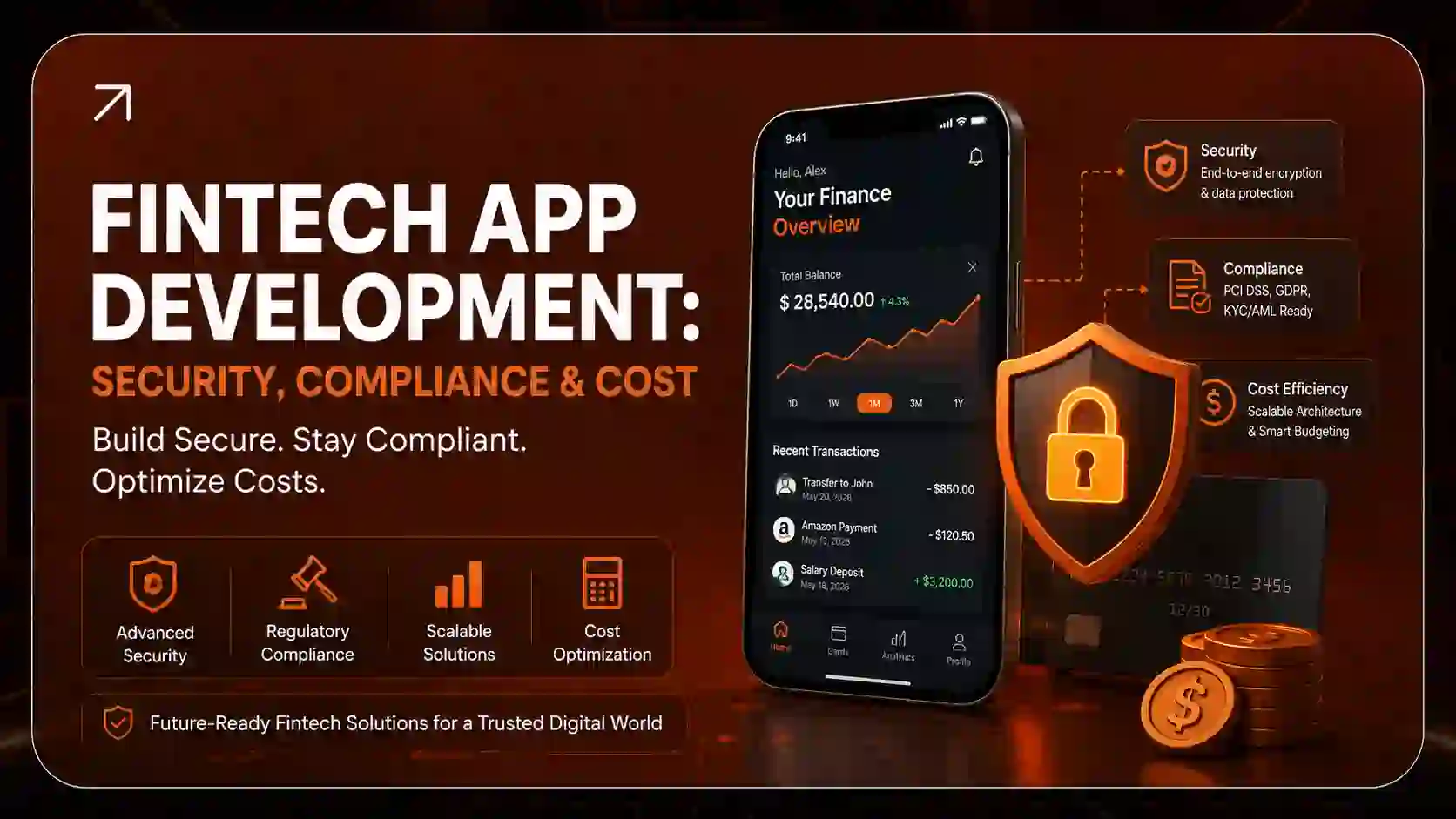

[…] Android-heavy fleets, our custom Android app development business guide covers device management and enterprise distribution […]
[…] you’re specifically building for Android first, the custom Android app development business guide walks through the Kotlin and Jetpack ecosystem in more […]
[…] deep Bluetooth Low Energy integration. If you’re planning the Android side specifically, our custom Android app development guide is a useful companion […]