


Fintech Software Development: Regulations & Best Practices (2026 Guide)
Building financial technology is not like building an ordinary app. A single overlooked compliance rule can trigger fines, freeze a launch, or erode the customer trust you spent years earning. Yet fintech remains one of the fastest-growing software categories in the world, powering everything from mobile banking and digital lending to payment gateways and wealth platforms. This guide breaks down the regulations that govern fintech software development, the best practices that keep your product secure and scalable, and how to choose a financial software development company that can ship compliant products without slowing you down. Whether you’re a startup founder or an enterprise decision-maker, you’ll leave with a clear, practical roadmap.
What Is Fintech Software Development?
Fintech software development is the process of designing, building, testing, and maintaining applications that deliver financial services through technology. That includes mobile banking apps, payment platforms, lending software, robo-advisors, insurtech tools, and blockchain-based products.
Unlike general software, fintech products handle money, sensitive personal data, and regulated transactions. Because of that, they must meet strict security, privacy, and compliance standards from day one — not as an afterthought. In practice, custom fintech software development blends three disciplines: engineering excellence, financial domain knowledge, and regulatory expertise.
The category is broad. A fintech app development project might mean a consumer-facing neobank, a B2B RegTech dashboard, or an API layer that connects a legacy bank to modern payment rails. What ties them together is a shared demand: speed to market, airtight security, and provable compliance.
Why Fintech Software Development Matters More Than Ever
Financial services are going digital at a pace few industries can match. Consumers now expect to open accounts, send money, invest, and borrow entirely from their phones. For businesses, that shift creates enormous opportunity — and equally serious responsibility.
Here’s why getting fintech development right matters:
- Trust is the product. People hand you their money and identity. One breach can end a brand.
- Regulators are watching. Financial software sits under more oversight than almost any other software category.
- Competition is fierce. Speed matters, but shipping fast without compliance is a liability, not an advantage.
- The stakes scale with growth. A bug in a game is annoying; a bug in a payment engine is expensive and sometimes illegal.
Companies that treat compliance and security as core features — rather than checkboxes — build products that last. If you’re weighing whether to build a proprietary platform or adapt existing tools, our breakdown of custom vs. off-the-shelf software offers a useful framework you can apply to fintech decisions too.
The Regulatory Landscape: Rules Every Fintech Product Must Respect
Regulation is where most fintech projects live or die. The exact rules depend on what your product does and where your users live, but a few frameworks apply broadly across the financial software development services space. Below is a plain-English map of the ones that matter most in the USA and beyond.
PCI DSS: Protecting Cardholder Data
If your app touches credit or debit card data, the Payment Card Industry Data Security Standard (PCI DSS) is non-negotiable. It defines how you store, process, and transmit card information — from encryption to network segmentation to access controls. You can review the official requirements directly from the PCI Security Standards Council. Most fintech teams reduce their compliance burden by using tokenization and trusted payment processors so raw card data never touches their own servers.
KYC and AML: Knowing Your Customer
Know Your Customer (KYC) and Anti-Money Laundering (AML) rules require financial platforms to verify user identities and monitor transactions for suspicious activity. In the USA, these obligations flow from the Bank Secrecy Act and are overseen in part by FinCEN. Practically, this means building identity verification, document checks, sanctions screening, and transaction-monitoring logic into your software — often through specialized third-party APIs.
SOC 2: Proving Operational Trust
SOC 2 is an auditing standard that demonstrates your organization securely manages customer data across five trust principles: security, availability, processing integrity, confidentiality, and privacy. For B2B fintech and any product selling to enterprises or banks, a SOC 2 report is frequently a prerequisite for doing business.
GDPR and Data Privacy Laws
If you serve users in the EU, the General Data Protection Regulation (GDPR) governs how you collect, store, and process personal data. In the USA, privacy is a patchwork — with laws like the CCPA in California and sector-specific rules layered on top. Fintech products should build privacy-by-design principles into their architecture: minimal data collection, clear consent, and strong deletion controls.
The Broader US Regulatory Framework
Beyond the standards above, several federal frameworks shape fintech in the United States:
- Dodd-Frank Act — sweeping post-2008 reforms covering consumer protection and financial stability.
- Bank Secrecy Act (BSA) — the backbone of US anti-money-laundering obligations.
- Consumer Financial Protection Bureau (CFPB) — the federal watchdog for consumer finance; explore guidance at the CFPB.
- FDIC regulations — relevant for products partnering with insured depository institutions; see the FDIC.
- Sarbanes-Oxley (SOX) and FFIEC guidelines — governing financial reporting integrity and IT examination standards.
The takeaway: regulation isn’t one rulebook. It’s a layered system that depends on your product, your users, and your partners. A seasoned fintech software development company maps these requirements to your specific build before a single line of code is written.
Best Practices for Fintech Software Development in 2026
Compliance sets the floor. Best practices are how you build something that’s genuinely excellent. Here are the principles the strongest fintech teams follow.
1. Build Security In From the First Sprint
Security cannot be bolted on later. Adopt a DevSecOps approach where security testing runs continuously alongside development. Key measures include:
- End-to-end data encryption in transit and at rest (AES-256 and TLS 1.2+ are common baselines).
- Multi-factor authentication and role-based access control.
- Regular penetration testing and vulnerability scanning.
- Secure secrets management — never hard-code API keys or credentials.
2. Choose an API-First, Modular Architecture
Modern fintech favours microservices and API-first design. This lets you scale individual components independently, integrate with banks and payment networks cleanly, and adapt as regulations evolve. Open banking API development is a prime example — connecting your product to account and payment data through standardized, permissioned interfaces. If integrations are central to your roadmap, our API integration services guide walks through the patterns that keep connected systems reliable.
3. Design for Compliance, Not Around It
The best fintech products treat compliance as a feature. Build audit logging, consent tracking, and reporting into the core so that when regulators or auditors ask questions, the answers are already in your system. This is the essence of RegTech (regulatory technology) — using software to make compliance automatic and provable.
4. Test Relentlessly and Realistically
Financial software demands a higher testing bar than most categories. Beyond unit and integration tests, you need load testing for transaction spikes, security testing for every release, and edge-case testing for the messy realities of money movement. Our software testing best practices guide covers the QA disciplines that prevent costly production failures.
5. Choose the Right Technology Stack
There’s no single “best” language, but certain choices recur in fintech for good reasons:
- Java and Kotlin — trusted for high-security, high-throughput banking systems.
- Python — popular for data analytics, fraud detection, and machine learning.
- Go and Rust — favoured for performance-critical payment services.
- Swift and Kotlin — the native mobile languages for mobile banking app development.
The right stack depends on your product’s scale, latency needs, and team expertise — not on trends.
6. Plan the Full Lifecycle
Great fintech products aren’t shipped once; they’re maintained, monitored, and improved. Following a disciplined software development lifecycle keeps releases predictable and compliant. If you’re new to structuring a project end to end, our SDLC guide for business owners explains each phase in plain language, and a well-written software requirements document is where every successful build begins.
How Much Does Fintech Software Development Cost?
Cost is the question every founder asks first. The honest answer: it depends on scope, complexity, and compliance requirements. That said, here are realistic ranges to plan around.
- MVP / simple app: roughly $50,000–$120,000
- Mid-complexity platform (lending, payments, dashboards): roughly $120,000–$300,000
- Enterprise fintech solutions with deep integrations and heavy compliance: $300,000 and up
Several factors move the number:
- Regulatory scope — KYC/AML, PCI DSS, and SOC 2 readiness add engineering and audit costs.
- Integrations — banking rails, SWIFT/ACH, card networks, and third-party APIs.
- Security depth — encryption, fraud detection, and penetration testing.
- Team model — in-house, outsourced, or a hybrid.
For a deeper breakdown tailored to the US market, see our detailed guide on custom software development cost in the USA. And if you’re launching lean, an MVP-first 90-day approach can validate your idea before you commit to full-scale spend.
How Long Does It Take to Build a Fintech App?
Timelines vary with complexity, but here’s a practical yardstick:
- MVP: 3–5 months
- Full-featured product: 6–12 months
- Complex enterprise platform: 12 months or more
Compliance work, integrations, and testing typically consume more time in fintech than in other categories — which is exactly why they should be planned from day one, not discovered late. For a realistic view of scheduling, our custom software development timeline breaks down what each phase actually requires.
Fintech vs. Traditional Banking Software: What’s the Difference?
Traditional banking software was built for stability inside closed institutions — often on legacy mainframes, updated slowly, and rarely customer-facing. Fintech flips that model:
- Speed: fintech ships and iterates in weeks, not years.
- Experience: fintech obsesses over UX/UI and mobile-first design.
- Openness: fintech embraces APIs, open banking, and cloud infrastructure.
- Data: fintech leans on analytics, AI, and real-time decisioning.
Many established banks now partner with fintech developers to modernize. If you’re weighing whether to update existing systems or rebuild, our legacy software modernization guide is a good starting point, as is our comparison of cloud vs. on-premise infrastructure.
The Role of AI in Modern Fintech
Artificial intelligence has moved from buzzword to backbone in financial software. Today it powers:
- Fraud detection — spotting anomalies across millions of transactions in real time.
- Credit scoring — assessing risk using richer, alternative data.
- Personalization — tailoring financial products to individual behavior.
- Automated compliance — flagging suspicious activity for AML review.
Integrating AI responsibly means keeping models explainable, auditable, and fair — regulators increasingly expect it. To see how intelligent features fit into a broader build, explore our overview of AI integration in custom software.
Common Fintech Products You Can Build
The term “fintech” covers a wide range of products. Some of the most in-demand include:
- Digital banking platforms and neobanks — full-service banking without branches.
- Payment gateways and wallets — secure, fast money movement.
- Lending software — from loan origination to servicing.
- Insurtech — digital-first insurance quoting, underwriting, and claims.
- Wealthtech — robo-advisors and investment platforms.
- RegTech — automated compliance and reporting tools.
Each shares the same non-negotiables: security, compliance, and reliability. The difference lies in the domain logic — which is why partnering with a team that understands both software and finance pays off.
Why Choose Leads 360 LLC for Fintech Software Development
Choosing the right partner is the single biggest decision in your fintech journey. At Leads 360 LLC, we combine engineering depth with real financial-domain and compliance expertise to help startups and enterprises ship secure, scalable, regulation-ready products.
Here’s what sets our approach apart:
- Compliance-first engineering. We map PCI DSS, KYC/AML, SOC 2, and privacy requirements to your build before development starts — so compliance is designed in, not patched on.
- Security by default. Encryption, secure architecture, and continuous testing are standard, not add-ons.
- Scalable, API-first architecture. We build modular systems that grow with you and integrate cleanly with banks and payment networks.
- Flexible engagement models. Need to scale your team fast? Our staff augmentation services plug vetted specialists into your project without long hiring cycles.
- US-based delivery, local expertise. As a Florida-rooted team, we understand the US regulatory environment and serve clients nationwide.
Explore our full range of custom software development services in the USA, or if you’re building close to home, our dedicated teams for custom software development in Florida and Orlando are ready to help. You can also learn more about who we are and how we work.
Not sure whether to build in-house or outsource? Our guide on how to choose a software development company in the USA lays out the exact questions to ask any potential partner — including us.
A Practical Checklist for Building Compliant Fintech Software
Use this as a quick-reference before and during development:
- Define your regulatory scope — identify which frameworks (PCI DSS, KYC/AML, SOC 2, GDPR) apply to your product and users.
- Write a detailed requirements document — clarity here prevents expensive rework.
- Choose a secure, scalable architecture — API-first, modular, cloud-ready.
- Design compliance into the core — audit logs, consent tracking, reporting.
- Implement layered security — encryption, MFA, access controls, secrets management.
- Integrate identity and fraud tooling — KYC verification and transaction monitoring.
- Test continuously — security, load, and edge-case testing every release.
- Plan for audits — keep documentation and evidence readily available.
- Launch an MVP, then iterate — validate before you scale.
- Monitor and maintain — regulations and threats evolve; so should your software.
Frequently Asked Questions
What is fintech software development?
Fintech software development is the process of building applications that deliver financial services through technology — such as banking apps, payment platforms, and lending software. Because these products handle money and sensitive data, they must be built with strong security and regulatory compliance from the start.
What regulations apply to fintech software development?
Common regulations include PCI DSS for card data, KYC/AML rules for identity verification and fraud prevention, SOC 2 for operational security, and GDPR or CCPA for data privacy. In the USA, frameworks like the Bank Secrecy Act, Dodd-Frank, and CFPB oversight also apply, depending on the product.
How much does fintech software development cost?
Costs typically range from about $50,000 for a simple MVP to $300,000 or more for complex enterprise platforms. The final figure depends on features, integrations, security depth, and compliance requirements.
What is the best programming language for fintech apps?
There’s no single best choice. Java and Kotlin are common for secure banking systems, Python for analytics and fraud detection, Go and Rust for high-performance payments, and Swift or Kotlin for native mobile banking apps. The right pick depends on your product’s needs.
Do fintech apps need to be PCI compliant?
Yes — if your app stores, processes, or transmits credit or debit card data, PCI DSS compliance is mandatory. Many teams reduce their burden by using tokenization and trusted payment processors so raw card data never touches their servers.
How do you choose a fintech software development company?
Look for proven security and compliance expertise, relevant fintech experience, a clear development process, strong communication, and flexible engagement models. Ask how they’ll map regulations to your build and how they handle testing and audits before you commit.
Conclusion: Build Fintech the Right Way
Fintech rewards teams that move fast — but only when speed is paired with security and compliance. The regulations may look daunting, yet with the right architecture, disciplined engineering, and an experienced partner, they become a competitive advantage rather than a roadblock. Products built compliant from day one launch smoother, scale further, and earn the trust that financial services depend on.
If you’re ready to build a secure, scalable, and compliant financial product, Leads 360 LLC is here to help — from strategy and MVP to full-scale enterprise delivery.
Ready to get started? Contact Leads 360 LLC today for a free consultation, and explore our advanced software development services to see how we can turn your fintech vision into a launch-ready reality.

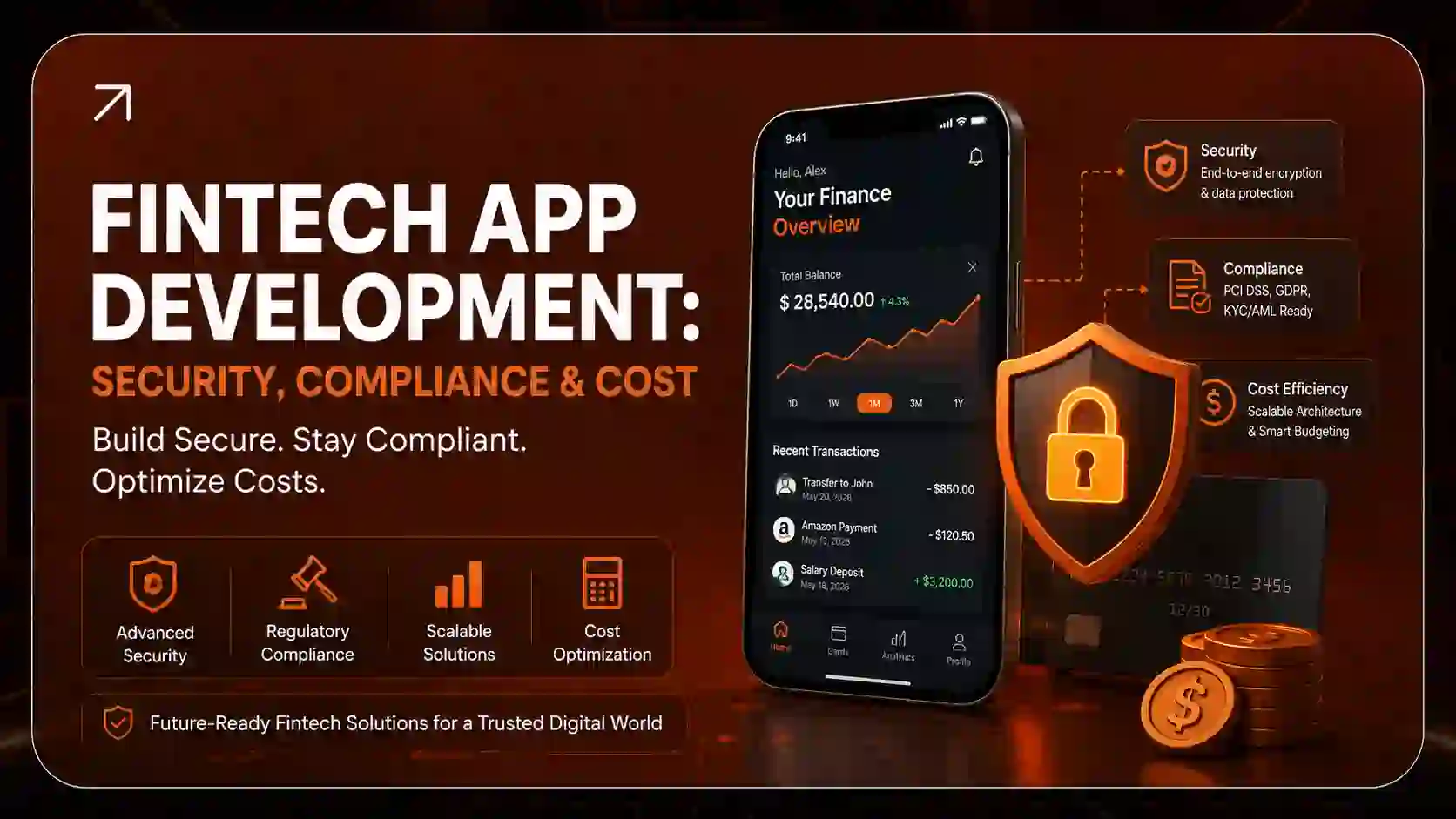



[…] Regulated industries add another layer. Healthcare apps touching patient data fall under HIPAA, and the HHS Security Rule guidance is the authoritative source. Our healthcare software development guide and EHR software development cost and compliance breakdown cover what that means in practice. Financial apps carry their own obligations, detailed in fintech software development regulations. […]
[…] fintech, logistics, real estate, and eCommerce. See our healthcare software development guide and fintech software development regulations for what domain expertise actually looks […]
[…] & regulated services — audit trails and reporting rules that shift often. Our fintech software development and regulations guide covers this […]
[…] The exact list depends on what your app does. A budgeting app has a lighter load than a lending app. A crypto exchange has one of the heaviest. For a deeper dive, read our guide to fintech software development regulations. […]
[…] apps: Regulations shape the architecture from day one. Our overview of fintech software development regulations explains what to […]