


How Much Does It Cost to Build a Mobile App in 2026? (Complete Pricing Guide)
You have an app idea. Maybe it’s a booking tool for your business, a marketplace for your industry, or a consumer product you believe in. Then comes the question every founder asks first: how much does it cost to build an app?
The honest answer is “it depends,” but that doesn’t help much when you’re setting a budget. So this guide goes further. We break down mobile app development cost in 2026 by complexity, platform, features, team location, and app type. You’ll see realistic price ranges, hourly rates, hidden costs, and practical ways to spend less without ending up with a weak product.
By the end, you’ll know roughly what your app should cost and which questions to ask before you sign a contract.
In 2026, most mobile apps cost between $20,000 and $400,000+ to build. A simple app or MVP typically costs $20,000–$50,000, a medium-complexity app costs $50,000–$120,000, and a complex or enterprise app costs $120,000–$400,000 or more. Plan an extra 15–20% of the build cost every year for maintenance.
What Is Mobile App Development Cost?
Mobile app development cost is the total amount you pay to plan, design, build, test, and launch an app on iOS, Android, or both. It covers the time of skilled people (strategists, designers, developers, testers, and project managers) plus tools, infrastructure, and third-party services.
Many businesses make one mistake early: they treat the launch price as the full price. It isn’t. The true cost of app development also includes what you spend after launch, which we’ll cover later.
What’s Included in App Development Cost?
A professional quote from an app development company usually covers:
- Discovery and planning: market research, feature prioritization, technical architecture, and a written scope
- UI/UX design: wireframes, user flows, clickable prototypes, and final visual design
- App (frontend) development: the screens and logic users interact with
- Backend development: servers, databases, APIs, admin panels, and user management
- Third-party integrations: payments, maps, messaging, analytics, and AI services
- Quality assurance: manual and automated testing across devices
- Deployment: App Store and Google Play submission
- Project management: sprint planning, communication, and reporting
If a quote doesn’t clearly list these items, ask why. Missing line items tend to show up later as change requests.
Mobile App Development Cost 2026 at a Glance
Here’s how pricing typically breaks down by complexity for apps built by a professional team:
| App Complexity | Typical Cost (2026) | Timeline | Best For |
|---|---|---|---|
| Simple app / MVP | $20,000 – $50,000 | 2–4 months | Startups validating an idea |
| Medium complexity | $50,000 – $120,000 | 4–7 months | SMBs needing custom features and integrations |
| Complex / Enterprise | $120,000 – $400,000+ | 7–12+ months | Funded startups and large organizations |
| AI feature add-on | +$10,000 – $100,000+ | Adds 1–3 months | Apps with chatbots, recommendations, or automation |
Simple Apps and MVPs ($20,000–$50,000)
A simple app has a focused feature set: user login, a handful of core screens, basic profiles, push notifications, and a lightweight backend. Think of a basic booking app, an internal company tool, or a content app.
This tier is where most startups begin. An MVP (minimum viable product) lets you test real demand before spending six figures. Our 90-day MVP development guide shows how to scope one without overbuilding.
Medium-Complexity Apps ($50,000–$120,000)
Medium apps add the features that make a product feel complete to paying customers:
- Payment gateway integration (Stripe, PayPal, Apple Pay, Google Pay)
- In-app chat or messaging
- Third-party API integrations such as CRMs, maps, and calendars
- Custom UI with animations
- Admin dashboard with analytics
- Role-based user accounts
Most small and mid-sized business apps land here, including many ecommerce and service apps.
Complex and Enterprise Apps ($120,000–$400,000+)
Complex apps involve real-time features, multiple user types, heavy data processing, strict security, or regulatory compliance. Examples include ride-hailing platforms, telehealth apps, fintech products, and large social networks.
Enterprise projects also require integration with existing systems like ERPs, single sign-on, and legacy databases. If that sounds like your project, read our guide to enterprise app development for large businesses before requesting quotes.
App Development Cost Breakdown by Phase
Where does the money actually go? For a typical $100,000 project, spending usually splits like this:
| Phase | Share of Budget | Example ($100K Project) |
|---|---|---|
| Discovery and planning | 10–15% | $10,000 – $15,000 |
| UI/UX design | 10–15% | $10,000 – $15,000 |
| App (frontend) development | 30–40% | $30,000 – $40,000 |
| Backend and API development | 20–25% | $20,000 – $25,000 |
| QA and testing | 10–15% | $10,000 – $15,000 |
| Deployment and project management | 5–10% | $5,000 – $10,000 |
One pattern shows up on project after project: teams that squeeze discovery pay for it later. Skipping planning to “save” $10,000 can easily cost $30,000 in rework. A clear software requirements document (SRD) is one of the cheapest forms of budget insurance you can buy.
For a closer look at each step, see the 7 stages of mobile app development.
9 Factors Affecting Mobile App Development Cost
Two apps that look similar on the surface can have very different price tags. These factors explain why.
- Feature count and complexity. Every feature needs design, code, testing, and maintenance. Real-time tracking, video streaming, and offline sync cost far more than static content screens.
- Platform choice. Building separately for iOS and Android costs more than one cross-platform codebase.
- Design depth. A clean, standard UI is cheaper than a fully custom design system. UI/UX design cost for apps usually runs $5,000 to $50,000+.
- Backend requirements. Apps with accounts, dashboards, and data syncing need a real backend. Simple apps may start with a backend-as-a-service like Firebase.
- Third-party integrations. Payments, maps, SMS, and CRMs each add development and testing time. Our API integration services guide explains what drives that effort.
- Security and compliance. HIPAA, PCI DSS, SOC 2, and GDPR requirements add architecture work, audits, and documentation.
- Team location and hiring model. Rates can differ by 2–3x between regions.
- Tech stack. Your frameworks, databases, and cloud provider affect both build cost and running cost.
- Timeline pressure. Tight deadlines mean larger teams working in parallel, which raises total cost.
iOS vs Android vs Cross-Platform App Development Cost
Platform strategy is one of the biggest budget decisions you’ll make.
| Approach | Typical Cost Range | Strengths | Trade-offs |
|---|---|---|---|
| Native iOS only | $25,000 – $250,000+ | Top performance, polished Apple experience | Misses Android users |
| Native Android only | $25,000 – $250,000+ | Large global reach | Device variety adds testing |
| Native iOS + Android | $50,000 – $450,000+ | Best performance on both | Two codebases, close to double the effort |
| Cross-platform (Flutter / React Native) | $30,000 – $300,000+ | One codebase, faster launch | Some native features need extra work |
Native App Development Cost
Native app development means writing separate apps in Swift for iOS and Kotlin for Android. iOS app development cost and Android app development cost are broadly similar per platform. Android projects sometimes need extra testing because of the wide range of devices and screen sizes. If Android is your main market, our custom Android app development guide covers it in detail.
Native is the right call for apps that rely on heavy graphics, advanced camera or AR features, or deep hardware access.
Flutter and React Native App Development Cost
Cross-platform development lets one team write one codebase that runs on both iOS and Android. Flutter (backed by Google) and React Native (backed by Meta) are the two leading frameworks. Their costs are close, so the better choice usually depends on your team’s skills and your app’s requirements, not price alone.
Older hybrid app development (web code inside a native wrapper) can be cheaper still, but it usually delivers a weaker user experience. That’s why most teams in 2026 choose Flutter or React Native instead.
Is Flutter Cheaper Than Native App Development?
Yes, in most cases. Because you maintain one codebase instead of two, Flutter and React Native projects typically cost 30–40% less than building separate native iOS and Android apps. Ongoing maintenance is cheaper too. Native still wins for performance-critical apps.
Still deciding? Read our full comparison of cross-platform vs native app development.
Hourly Rate for App Developers in 2026
Labor is the largest part of any app development budget, so where your team is based matters a lot. Here are typical hourly rates for mobile app developers in 2026:
| Region | Typical Hourly Rate |
|---|---|
| United States and Canada | $80 – $150+ (premium agencies charge more) |
| United Kingdom and Western Europe | $70 – $140 |
| Australia | $75 – $140 |
| Eastern Europe | $40 – $75 |
| Latin America | $35 – $70 |
| India and South Asia | $20 – $50 |
| Southeast Asia | $20 – $45 |
These are market ranges, not fixed prices. Senior specialists in AI, security, or blockchain charge above these bands in every region.
For context, the U.S. Bureau of Labor Statistics reports median pay for software developers well into six figures. That’s a big reason US agency rates sit where they do.
Cost to Hire App Developers in the USA vs Asia
Offshore app development rates can be one-third or less of US rates. On paper, a 1,000-hour project might cost around $120,000 with a US team and $35,000 offshore.
But the hourly rate isn’t the whole story. Time zone gaps, communication overhead, code quality, and developer turnover can erase those savings quickly. Many businesses now use a blended model: US-based strategy, design, and project management combined with a distributed delivery team.
Our guides to offshore vs nearshore vs onshore development and software development outsourcing break down the real trade-offs.
App Development Cost in US Cities: Orlando, Florida, New York, and Beyond
Within the United States, rates generally follow local cost of living and competition for tech talent:
- Highest-cost markets: San Francisco, New York City, Seattle, Boston, and Los Angeles. Agencies here often charge at the top of the US range, and enterprise app development in NYC can climb well into six figures.
- Mid-range markets: Austin, Chicago, Dallas, Houston, Atlanta, and Miami.
- Value-focused markets: Orlando and much of Florida, where experienced teams often deliver US-based quality at more competitive rates than coastal tech hubs.
Working with a nearby team also makes workshops and feedback loops easier. Leads 360 LLC provides custom software development in Orlando, across Florida, and throughout the USA.
Freelancer vs Agency vs In-House Team
| Option | Typical Cost | Best For | Watch Out For |
|---|---|---|---|
| Freelance app developer | $30 – $150/hour | Small apps, specific tasks | Single point of failure, limited QA |
| App development agency | $50,000 – $400,000+ per project | Full builds with accountability | Quality varies widely |
| In-house team | $600,000+ per year for a small US team | Long-term product companies | Slow hiring, high fixed costs |
| Staff augmentation | Monthly rate per developer | Scaling an existing team fast | Needs internal tech leadership |
Is it cheaper to build an app in-house or outsource? For most small and mid-sized businesses, outsourcing is cheaper for the first version. In-house makes sense once the app becomes core to your business and needs constant development. If you already have a technical lead, staff augmentation is a flexible middle ground. See IT staff augmentation cost in the USA for pricing details.
Cost to Build Popular Types of Apps
Here’s what common app categories typically cost in 2026:
| App Type | Estimated Cost | Main Cost Drivers |
|---|---|---|
| Basic business or booking app | $20,000 – $60,000 | Scheduling, notifications, simple backend |
| Ecommerce app | $40,000 – $150,000 | Catalog, cart, payment gateway, order tracking |
| Multi-vendor marketplace app | $80,000 – $250,000+ | Vendor portals, split payments, reviews |
| Food delivery app | $60,000 – $250,000 | Customer, restaurant, and courier apps plus admin |
| Uber-like ride-hailing app | $80,000 – $300,000+ | Real-time GPS, driver matching, two apps |
| Social media app (like Instagram) | $80,000 – $350,000+ | Media uploads, feeds, messaging, moderation |
| Healthcare / telehealth app | $80,000 – $300,000+ | HIPAA compliance, video calls, EHR integration |
| Fintech / banking app | $100,000 – $400,000+ | Security, KYC, regulatory compliance |
| AI chatbot app | $30,000 – $150,000 | LLM integration, conversation design, usage fees |
Cost to build an app like Uber: You’re not building one app. You’re building a rider app, a driver app, and an admin dashboard, all synced in real time. That’s why ride-hailing MVPs rarely come in under $80,000.
How much does a healthcare app cost? Meeting HIPAA requirements from the U.S. Department of Health and Human Services adds encryption, access controls, audit logs, and vendor agreements. Learn more in our healthcare software development guide and our breakdown of EHR software development cost and compliance.
Fintech apps: Regulations shape the architecture from day one. Our overview of fintech software development regulations explains what to expect.
Shopify merchants: A custom Shopify app can cost less than a standalone ecommerce build. See our guide to Shopify app development.
How Much Does It Cost to Integrate AI in a Mobile App?
AI is the biggest new cost driver in 2026. Most founders now ask about chatbots, smart search, personalization, or automation. Here’s what it typically costs:
- Basic AI features ($10,000–$40,000): a chatbot, text summarization, or smart suggestions using an existing LLM API
- Advanced AI features ($40,000–$100,000): retrieval-augmented generation (RAG) on your own data, voice assistants, image recognition, or recommendation engines
- Custom AI systems ($100,000+): fine-tuned models, predictive analytics, and AI agents that take actions inside your app
Here’s the part many budgets miss: LLM API integration cost is ongoing. Providers such as OpenAI charge based on tokens processed, so your bill grows with usage. A small app might spend $50–$500 a month, while a popular consumer app can spend thousands.
Good teams keep this under control with caching, smaller models for simple tasks, and usage limits. Our guide to AI integration in custom software covers architecture choices that keep AI costs predictable.
Hidden Costs and App Maintenance Cost
Launch day isn’t the finish line. Your total cost of ownership (TCO) includes everything needed to keep the app secure, fast, and useful.
How Much Does App Maintenance Cost per Year?
Plan for 15–20% of your original development cost every year. For a $100,000 app, that’s about $15,000–$20,000 annually. Maintenance covers:
- Compatibility with new iOS and Android versions released each year
- Bug fixes and performance improvements
- Security patches (the OWASP Mobile Top 10 is a useful benchmark for common risks)
- Updates to third-party SDKs and APIs
- Small feature improvements
Server Hosting, App Store Fees, and Other Ongoing Expenses
| Expense | Typical Cost |
|---|---|
| Apple Developer Program | $99 per year |
| Google Play Console | $25 one-time registration |
| App store commission | 15–30% of digital sales |
| Cloud hosting (small app) | $50 – $500 per month |
| Cloud hosting (scaling app) | $1,000 – $10,000+ per month |
| Third-party services (maps, SMS, email) | $50 – $2,000+ per month |
| AI API usage | $50 – $10,000+ per month |
| Post-launch app support | $1,500 – $10,000+ per month |
Publishing requires an Apple Developer Program membership and a Google Play developer account. Apple’s App Store Small Business Program offers a reduced 15% commission for eligible smaller developers, and Google Play offers a similar reduced rate. Store payment rules have been changing in the US and EU, so confirm current policies before finalizing your revenue model.
Don’t forget marketing. Even a great app needs visibility. Pair your launch with performance marketing and a website supported by professional SEO services.
How Long Does It Take to Build a Mobile App?
Most mobile apps take 3 to 9 months from planning to launch. A simple MVP can launch in 8–16 weeks, medium-complexity apps take 4–7 months, and complex or enterprise apps often need 9–12 months or more.
A typical app development timeline looks like this:
- Discovery and planning: 2–4 weeks
- UI/UX design: 3–6 weeks
- Development: 8–24+ weeks
- Testing and QA: 3–6 weeks, running alongside development
- App store submission and launch: 1–2 weeks
Time and cost move together, since every extra month adds team hours. Our article on custom software development timelines explains what speeds projects up. Methodology matters too, and our Agile vs Waterfall comparison explains why most app teams choose Agile.
Fixed Price vs Time & Material: Which Contract Fits Your Budget?
Do app developers charge hourly or a fixed price? Both. The right model depends on how clear your scope is.
- Fixed price: one agreed price for a clearly defined scope. Good for small, well-documented MVPs, but less flexible when requirements change. Vendors often add a risk buffer.
- Time & material (T&M): you pay for actual hours worked. Ideal for evolving products where priorities shift each sprint.
- Dedicated team: a monthly fee for a team focused only on your product. Best for long-term development.
For a deeper comparison, read dedicated team vs time and material.
How to Reduce Mobile App Development Cost Without Cutting Corners
The cheapest way to build a mobile app isn’t picking the lowest bid. It’s avoiding work you don’t need. Here’s what actually works:
- Start with an MVP. Launch core features, gather feedback, then invest in what users want.
- Document requirements clearly. A defined scope prevents expensive change requests.
- Go cross-platform when it fits. Flutter or React Native can save 30–40% compared with two native apps.
- Use proven third-party services. Don’t build payments, authentication, or chat engines from scratch.
- Start lean on the backend. Backend-as-a-service tools reduce early infrastructure costs.
- Test early and often. Bugs caught in development cost far less than bugs found by users. Our software testing best practices guide shows how.
- Right-size your infrastructure. Our cloud vs on-premise comparison helps you avoid overpaying.
- Choose the right partner. Skilled teams finish faster and create less technical debt. Use our checklist on how to choose a mobile app development company.
Can You Build an App for Free in 2026?
Technically, yes. No-code app builders offer free plans for creating basic apps without writing code. However, you’ll still pay for app store accounts, and free plans usually come with platform branding, limited features, and restricted scalability.
No-code and low-code tools work well for prototypes, internal tools, and very simple apps. For a scalable product with custom features, integrations, or strong security, custom development remains the better long-term investment.
Real-World Budget Examples
These illustrative scenarios show how the numbers come together in practice.
Example 1: Orlando fitness studio booking app
A local studio wants class booking, payments, membership management, and push reminders. Built with Flutter and a managed backend, a realistic budget is $35,000–$60,000 over 3–4 months.
Example 2: New York fintech startup MVP
A funded startup needs a budgeting app with bank account linking, identity verification, spending insights, and strong security. It launches native iOS first and adds Android later. Expect $90,000–$160,000 for the MVP, plus compliance review costs.
Example 3: Regional retailer ecommerce app with AI
A mid-sized retailer wants loyalty rewards, personalized recommendations, an AI shopping assistant, and integration with its inventory system. Budget: $110,000–$200,000, plus roughly $1,000–$4,000 per month for hosting and AI usage.
Notice the pattern: integrations, compliance, and AI move budgets far more than the number of screens.
Is Building a Mobile App Worth It? ROI in 2026
A mobile app pays off when it solves a real problem for a clearly defined audience. Common ROI drivers include:
- New revenue from subscriptions, in-app purchases, or direct sales
- Higher retention through push notifications and loyalty features
- Operational savings when apps replace manual processes
- Better customer data that improves marketing and product decisions
A simple ROI check: compare your three-year total cost of ownership (build, maintenance, hosting, and marketing) against the revenue gains or savings you expect over the same period. If the math only works in a best-case scenario, start smaller with an MVP.
Not sure a custom build is right for you? These signs you need custom software development can help you decide.
Why Choose Leads 360 LLC for Your Mobile App Project
Your development partner matters as much as your feature list. Here’s why choose Leads 360 LLC when you’re ready to build:
- Clear, detailed estimates. You see what’s included phase by phase, so budgets stay predictable.
- Planning before coding. Scope, users, and success metrics are defined early to protect your investment.
- Local focus with national reach. We work with businesses in Orlando, across Florida, and throughout the United States.
- Flexible engagement models. Choose a full project build, a dedicated team, or augmented developers for your existing team.
- Support beyond launch. Alongside software development, we offer web development, SEO, and performance marketing so your app gets found and used.
Explore advanced services at Leads 360 LLC to see how we support businesses from first idea to long-term growth.
Mobile App Development Trends 2026 That Affect Your Budget
- AI-assisted development: AI coding tools speed up routine work, but experienced engineers are still essential for architecture, security, and quality.
- AI features as a user expectation: Smart search, personalization, and conversational interfaces are becoming standard.
- Cross-platform maturity: Flutter, React Native, and Kotlin Multiplatform have made single-codebase apps a mainstream choice.
- Stricter privacy rules: Data regulations increase compliance work, especially in healthcare and finance.
- Deeper integrations: Apps increasingly connect to CRMs, ERPs, and SaaS platforms. Building a subscription product? See our SaaS product development guide.
- Shifting app store rules: Alternative payment options in some markets may reduce commission costs for certain businesses.
Frequently Asked Questions About Mobile App Development Cost
How much does it cost to build a mobile app in 2026?
Most mobile apps cost $20,000 to $400,000+ in 2026. Simple apps and MVPs cost $20,000–$50,000, medium-complexity apps cost $50,000–$120,000, and complex or enterprise apps cost $120,000–$400,000 or more. Features, platforms, and team location drive the final price.
How much does an MVP app cost?
An MVP app typically costs $20,000 to $60,000 in 2026. The price depends on the number of core features, whether you launch on one or both platforms, and your team’s hourly rate. Most MVPs take 8–16 weeks to build.
How much do app developers charge per hour in 2026?
App developers charge roughly $80–$150+ per hour in the United States, $40–$75 in Eastern Europe, $35–$70 in Latin America, and $20–$50 in India and South Asia. Premium US agencies and specialists in AI or security charge more.
How much does app maintenance cost per year?
App maintenance usually costs 15–20% of the original development cost each year. For a $100,000 app, budget $15,000–$20,000 annually for updates, bug fixes, security patches, and OS compatibility, plus separate hosting and third-party service fees.
How much does it cost to publish an app on the App Store?
Publishing on Apple’s App Store requires an Apple Developer Program membership costing $99 per year. Google Play charges a one-time $25 registration fee. Both stores also take a commission on digital sales, typically 15% for eligible smaller developers and up to 30% otherwise.
Why is custom app development so expensive?
Custom app development is expensive because it requires skilled specialists in strategy, design, development, testing, and project management, often for several months. Every feature must be designed, coded, tested across devices, secured, and maintained. You’re paying for a product built around your exact business needs.
Conclusion: Plan Your App Budget With Confidence
So, how much does it cost to build a mobile app in 2026? For most businesses, somewhere between $20,000 and $400,000+, depending on complexity, platform, features, and who builds it. Smart budgets also account for yearly maintenance, hosting, and marketing.
Keep these takeaways in mind:
- Start with a focused MVP and grow based on real user feedback
- Choose cross-platform development when native performance isn’t critical
- Budget for the full app lifecycle, not just launch day
- Choose a partner for quality and transparency, not just the lowest hourly rate
Understanding the software development life cycle will also help you ask sharper questions and compare quotes with confidence.
Ready to turn your idea into a real, revenue-driving app? Book a seat at the advanced services offered by Leads 360 LLC. Contact our team today to discuss your project and get a detailed estimate for your mobile app.

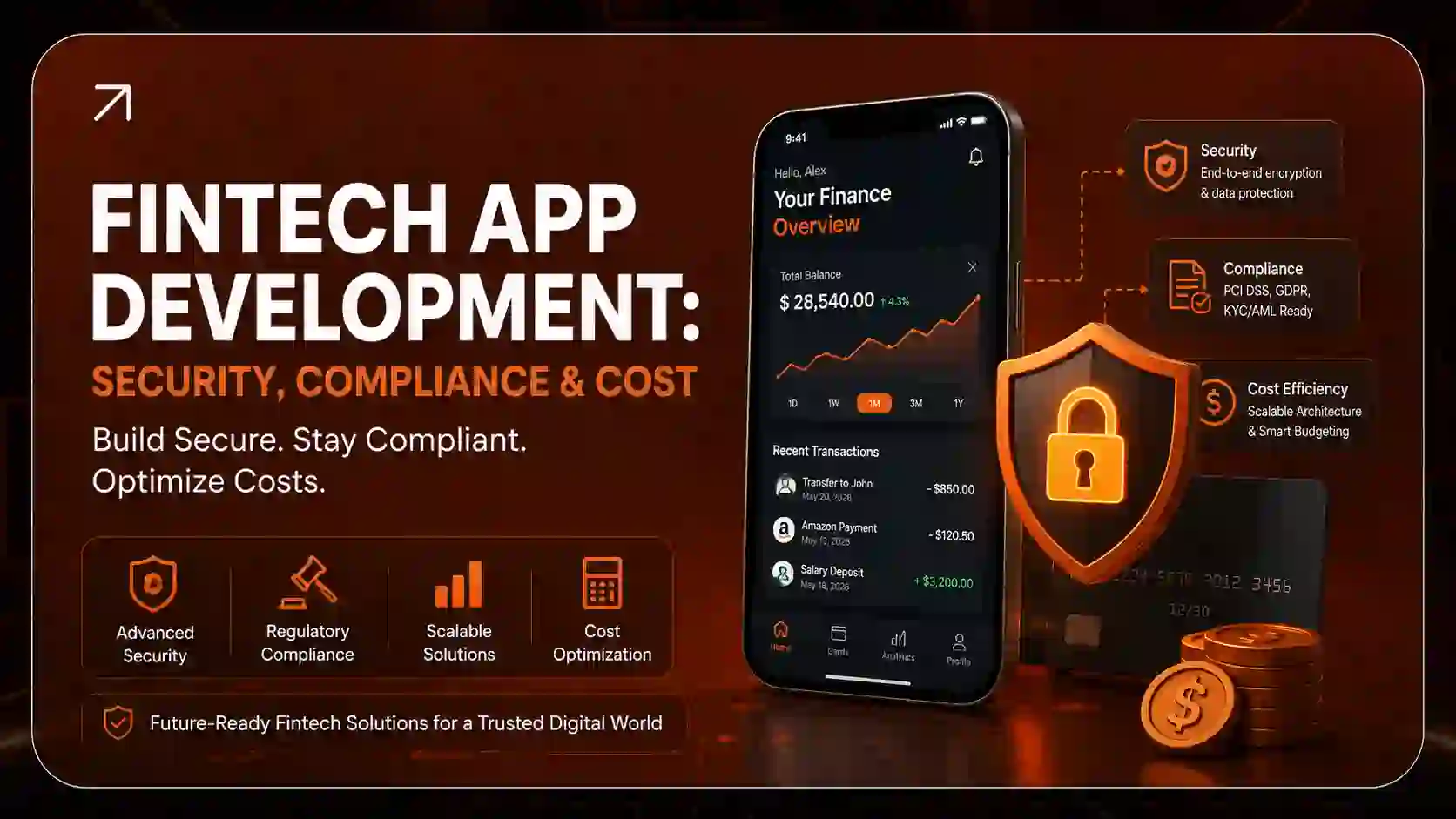


[…] Pro tip: Start with a focused MVP, test it with real learners, and expand from there. Our 90-day MVP development guide shows how to do this without overspending. For broader pricing context, see custom software development cost in the USA and how much it costs to build an app in 2026. […]
[…] For a broader view of pricing across app types, see our guide on how much it costs to build an app in 2026. […]