

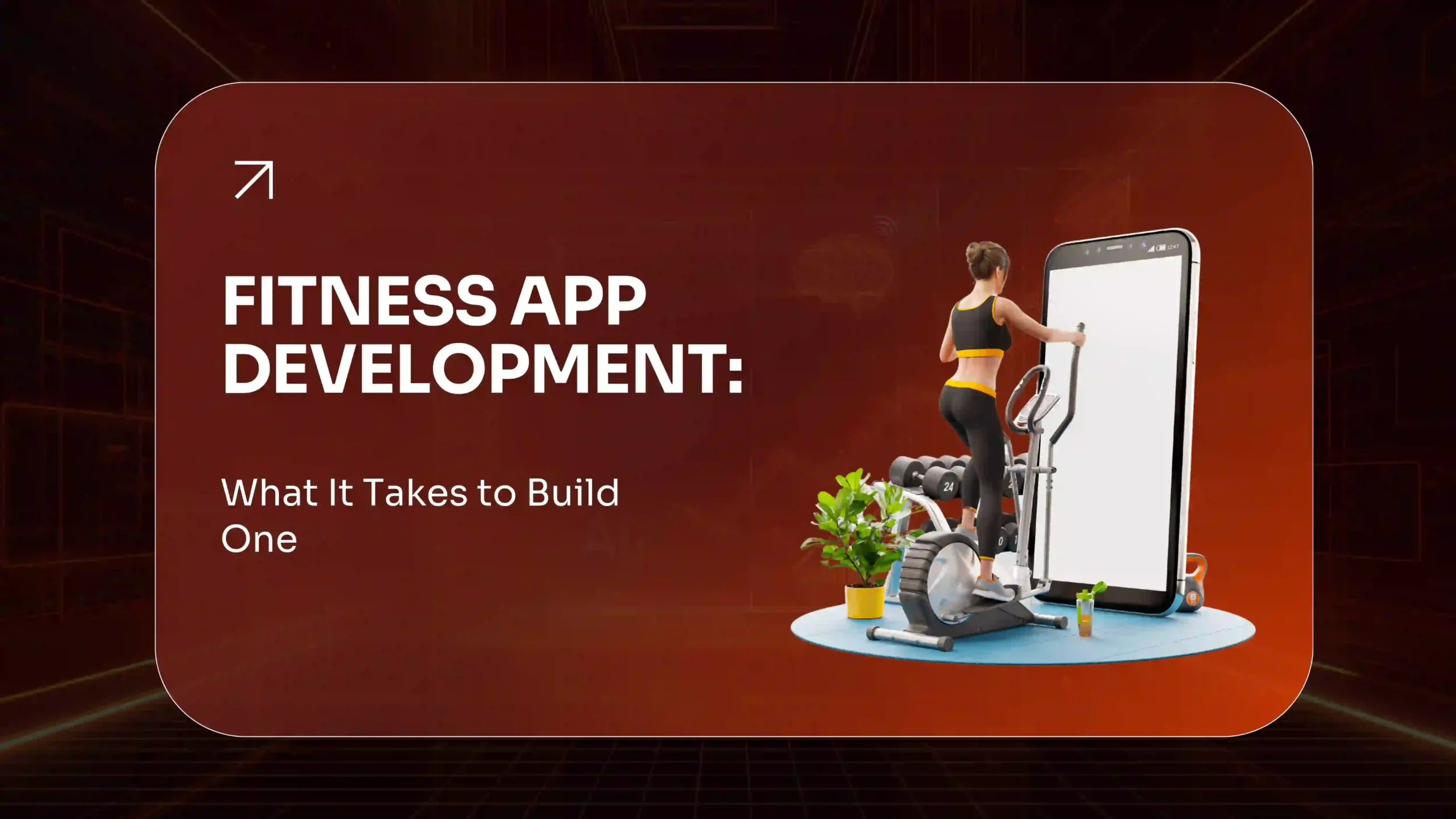
Fitness App Development: What It Takes to Build a Fitness App in 2026
Most fitness apps don’t fail because of bad code. They fail because the founders built the wrong thing. They crammed in 40 features, skipped wearable planning, or picked a monetization model that users hated.
Fitness app development is the process of planning, designing, building, testing, and launching a mobile app that helps people train, eat better, track activity, or improve their overall wellness. Done right, it can become a steady, subscription-driven business.
This guide explains how to build a fitness app from scratch. It covers the real fitness app development cost, the features users expect, the right tech stack, wearable integrations, compliance, and timelines. It also shows you what to look for in a fitness app development company, so your budget goes toward results instead of rework.
What Is Fitness App Development?
Fitness app development is the end-to-end process of creating a mobile or web app for workouts, nutrition, activity tracking, or wellness. It includes market research, UI/UX design, frontend and backend development, wearable and API integrations, QA testing, app store launch, and ongoing maintenance.
A fitness app can be as simple as a workout logger or as complex as a connected fitness platform like Peloton, with live streaming classes, heart rate syncing, and leaderboards.
Custom fitness app development means building the product around your specific users, brand, and business model. That is different from white-label solutions, which hand you a pre-built template with your logo on it.
Why Fitness App Development Matters Right Now
The digital fitness market is still growing fast. People now expect to train, track, and get coached through their phones and smartwatches.
According to Towards Healthcare, the global fitness app market is estimated at US$12.1 billion in 2025 and US$13.81 billion in 2026, with projections reaching around US$45.45 billion by 2035. The same fitness app market research reports that North America led the market in 2024, iOS was the dominant platform, and activity tracking is expected to grow fastest by type.
Here is what that means for you:
- Demand is proven. You are not trying to convince people that fitness apps are useful.
- Competition is real. You need a clear niche and a strong retention strategy.
- Wearables are driving growth. Smartwatch and fitness tracker integration is no longer optional for many app types.
- B2B is expanding. Gyms, studios, personal trainers, and corporate wellness programs all need custom software.
Types of Fitness Apps: Choose Your Niche First
Before you think about features, decide what kind of fitness app you are building. Each category has different technical needs, costs, and user expectations.
1. Workout and Exercise Apps
These apps offer workout plans, an exercise library, video workouts, and progress tracking. Think Nike Training Club, Fitbod, or Freeletics. Workout app development often focuses on personalization and smooth video playback.
2. Nutrition and Diet Apps
Diet apps like MyFitnessPal and Noom rely on a calorie counter, macro tracking, a meal planner, and a large food database. Barcode scanning and food logging speed are critical here.
3. Activity and Fitness Tracker Apps
Running and cycling apps like Strava use GPS tracking, step counters, heart rate monitoring, and route mapping. They depend heavily on wearable integration and background location tracking.
4. Yoga and Meditation Apps
Wellness apps like Calm and Headspace focus on guided audio, video sessions, sleep tracking, and habit tracking. Yoga app development usually requires high-quality media delivery and offline mode.
5. Gym Management and Studio Apps
Gym management app development includes class booking, membership management, check-ins, payments, and trainer scheduling. These apps serve both members and staff.
6. Personal Trainer and On-Demand Coaching Apps
Personal trainer app development connects coaches with clients through custom programs, in-app chat, video check-ins, and progress reviews. On-demand personal trainer apps work more like marketplaces.
7. Connected Fitness and Smart Equipment Apps
Apps like Peloton pair with bikes, treadmills, or rowers using Bluetooth Low Energy and IoT sensors. If this is your direction, our guide to IoT app development services explains how device connectivity works.
8. Corporate Wellness Apps
Corporate wellness apps help employers run step challenges, wellness programs, and health incentives. They typically need admin dashboards, team leaderboards, and strong data privacy controls.
Expert tip: Pick one primary category for your MVP. A hybrid “workouts + nutrition + meditation + social” app is the fastest way to blow your budget and confuse users.
Must-Have Features of a Fitness App
Every fitness app needs user onboarding, user profiles, goal setting, activity or workout tracking, progress dashboards, push notifications, and wearable integration. Advanced apps add AI-powered personalization, video streaming, gamification, social community features, and subscription management.
Core Features for an MVP
- User onboarding: A short quiz that captures goals, fitness level, and preferences. Keep it under 60 seconds.
- User profiles: Age, weight, height, goals, and connected devices.
- Workout plans and exercise library: Clear instructions, images, or short video clips.
- Activity tracking: Steps, calories, distance, and workout duration.
- Progress tracking: Charts, streaks, personal records, and body measurements.
- Goal setting: Weekly and monthly targets that adapt over time.
- Push notifications: Smart reminders, not spam.
- Subscription management: In-app purchases through Apple and Google billing.
Advanced Features That Drive Retention
- Video workouts and live streaming classes: Needs a scalable video CDN and adaptive streaming.
- AI workout generator: Builds and adjusts plans based on user performance and recovery.
- Computer vision and pose estimation: Uses the phone camera to check exercise form and count reps.
- Gamification: Badges, challenges, leaderboards, and streaks.
- Social and community features: Activity feeds, friends, groups, and social sharing.
- Virtual coaching: In-app chat or video sessions with certified trainers.
- Nutrition tracking: Meal logging, barcode scanning, and macro breakdowns.
- Offline mode: Downloaded workouts for gyms with weak signal.
- Sleep tracking and heart rate monitoring: Pulled from wearables for recovery insights.
What we’ve seen work: The apps with the best retention rates usually do three things well: personalization, visible progress, and social accountability. Fancy AR features rarely matter if those three are weak.
How to Build a Fitness App: Step-by-Step Development Process
To build a fitness app, (1) research your market and niche, (2) define MVP features, (3) design UI/UX wireframes and prototypes, (4) choose a tech stack, (5) develop the frontend and backend, (6) integrate wearables and APIs, (7) test thoroughly, (8) launch on the App Store and Google Play, and (9) iterate based on user data.
Here is the fitness app development process we recommend, step by step.
Step 1: Product Discovery and Market Research
Study your target users and run a competitor analysis. Look at reviews of apps like Strava, Fitbod, and MyFitnessPal. The one-star reviews show you exactly what users want fixed.
Step 2: Define Your MVP Scope
List every feature, then cut it in half. Then cut it again. Document the final scope in a software requirements document so designers, developers, and stakeholders stay aligned.
Step 3: UI/UX Design, Wireframing, and Prototyping
Fitness apps are used mid-workout, often with sweaty hands. That means large tap targets, high contrast, and minimal typing. Build clickable prototypes and test them with real users before writing code.
Step 4: Choose Your Tech Stack
Decide between native and cross-platform development, pick your backend, and plan your cloud infrastructure. More on this below.
Step 5: Agile Development
Build in two-week sprints so you can review progress and adjust early. If you are weighing methodologies, our comparison of agile vs waterfall development explains why agile fits most app projects.
Step 6: Wearable and Third-Party API Integration
Connect Apple HealthKit, Health Connect, Fitbit, Garmin, payment gateways, and video services. Proper API integration services prevent data sync errors that frustrate users.
Step 7: QA Testing
Test on real devices, not just simulators. Check background tracking, battery drain, data accuracy, and payment flows. Follow proven software testing best practices to catch bugs before your users do.
Step 8: App Store Launch
Prepare your App Store and Google Play listings, screenshots, and privacy disclosures. Apply app store optimization (ASO) from day one.
Step 9: Post-Launch Support and Iteration
Track retention, crash rates, and feature usage. Ship updates regularly. For a deeper look at each phase, read our breakdown of the 7 stages of mobile app development.
Fitness App Development Cost in 2026
Fitness app development costs typically range from about $30,000 for a basic MVP to $150,000 or more for a fully featured app with wearable integrations, live video streaming, and AI-driven recommendations. The final price depends on features, platforms, design complexity, integrations, and your development team’s location.
Here is a realistic breakdown by app type.
Basic Fitness App (MVP): $30,000 to $60,000
- Workout logging, exercise library, simple progress charts
- One platform or a cross-platform build
- Basic wearable sync with Apple HealthKit or Health Connect
- Typical timeline: 3 to 4 months
Mid-Level Fitness App: $60,000 to $150,000
- Personalized plans, nutrition tracking, subscriptions
- Multiple wearable integrations, social features, gamification
- Custom UI/UX and an admin dashboard
- Typical timeline: 5 to 7 months
Advanced Fitness Platform: $150,000 to $300,000+
- Live streaming classes, AI workout generation, pose estimation
- Smart equipment integration, trainer marketplace, corporate wellness tools
- HIPAA-ready architecture and enterprise-level scalability
- Typical timeline: 8 to 12+ months
What Drives Fitness App Development Cost?
- Number of platforms: iOS only, Android only, or both
- Feature complexity: Video streaming and AI add significant cost
- Wearable integrations: Each additional device ecosystem adds work
- Design quality: Custom animations and illustrations cost more than templates
- Compliance: HIPAA requirements add security, audit, and hosting costs
- Team location: US-based, nearshore, and offshore rates vary widely
For a broader view of pricing across app types, see our guide on how much it costs to build an app in 2026.
How Much Does It Cost to Maintain a Fitness App?
Plan to spend roughly 15% to 20% of your initial build cost each year on maintenance. That covers OS updates, bug fixes, server and video hosting, API changes, security patches, and small feature improvements.
Real-world example: An $80,000 fitness app would typically need a maintenance budget of about $12,000 to $16,000 per year, before adding new features.
How Long Does It Take to Develop a Fitness App?
A basic fitness app MVP usually takes 3 to 4 months to build. A mid-level app takes 5 to 7 months, and an advanced platform with AI, live streaming, and multiple wearable integrations can take 8 to 12 months or more.
A typical MVP timeline looks like this:
- Discovery and planning: 2 to 3 weeks
- UI/UX design: 3 to 5 weeks
- Development: 8 to 12 weeks
- QA testing: 2 to 4 weeks, overlapping with development
- App store submission and launch: 1 to 2 weeks
Want to launch faster? Our 90-day MVP development guide shows how to get a focused product in front of users quickly.
Best Tech Stack for Fitness App Development
Most modern fitness apps use React Native or Flutter for the cross-platform frontend, Node.js or Python for the backend API, PostgreSQL or MongoDB for the database, and AWS or Google Cloud for hosting. Native apps use Swift for iOS and Kotlin for Android.
Frontend (Mobile)
- React Native: Great for teams with JavaScript skills. Strong libraries for HealthKit and Health Connect.
- Flutter: Excellent UI performance and custom animations from one codebase.
- Swift (iOS native): Best choice for deep Apple Watch integration and watchOS apps.
- Kotlin (Android native): Best for Wear OS and advanced Android sensor access.
Backend and Database
- Node.js or Python: Python is especially useful if you plan to add machine learning features.
- PostgreSQL: Reliable for structured data like users, plans, and subscriptions.
- MongoDB: Flexible for activity logs and workout history.
- Firebase: Useful for fast MVPs, authentication, and real-time features.
Cloud, Video, and Infrastructure
- AWS or Google Cloud: For hosting, storage, and scalability. Our cloud app development guide explains how to choose.
- Video CDN: Services like AWS CloudFront or Mux handle video streaming at scale.
- Payments: Apple In-App Purchase, Google Play Billing, and Stripe for web payments.
Native vs Cross-Platform: Which Should You Choose?
Cross-platform development (React Native or Flutter) is usually faster and 30% to 40% cheaper because one codebase runs on both iOS and Android. Native development (Swift and Kotlin) is better when your app depends heavily on smartwatch apps, advanced sensors, or maximum performance.
Choose cross-platform if you need to launch on both platforms quickly with a limited budget. Choose native if Apple Watch or Wear OS apps are central to your product. Our full cross-platform vs native app development comparison covers the trade-offs in detail. If Android is your main market, our custom Android app development guide is also worth reading.
Wearable and API Integrations: Apple HealthKit, Health Connect, Fitbit, and Garmin
Fitness apps don’t measure biometrics directly. They pull steps, heart rate, sleep, and workout data from platform APIs like Apple HealthKit on iOS and Health Connect on Android, plus device-specific APIs from Fitbit, Garmin, and others.
Apple HealthKit (iOS)
Apple HealthKit is the central health data store on iPhone and Apple Watch. Your app requests permission for each data type, such as steps or heart rate, and users approve them individually.
Health Connect (Android) and the End of Google Fit
This is a big change in 2026. Google has deprecated the Google Fit APIs, supporting them only until 2026 before turning them down. Google stopped accepting new developer signups for the Google Fit REST and Android APIs on May 1, 2024, and named Health Connect as the recommended Android replacement.
If you are planning Android integration today, build directly on Health Connect. Don’t start new work on Google Fit.
Fitbit, Garmin, and Other Wearables
Fitbit and Garmin offer their own APIs for syncing activity, sleep, and heart rate data. Many teams also use aggregation services to connect multiple devices through a single integration.
Smart Gym Equipment and IoT
Connected bikes, treadmills, and heart rate straps usually communicate through Bluetooth Low Energy. This is where hardware testing becomes critical.
Expert tip: Budget extra time for wearable testing. Data from different devices rarely matches perfectly, and users notice when their step count looks “wrong.”
How to Develop an AI-Powered Fitness App
AI is now one of the strongest differentiators in fitness app development. Here’s where it adds real value:
- Personalized workout plans: Adjusts sets, reps, and rest based on performance and recovery.
- Nutrition recommendations: Suggests meals that fit a user’s macros and preferences.
- Pose estimation: Uses computer vision to check form and count reps in real time.
- Churn prediction: Flags users who are likely to cancel, so you can re-engage them.
- AI coaching chat: Answers training questions using a large language model with guardrails.
Start with one high-impact AI feature rather than five experimental ones. Our guide to AI integration in custom software explains how to plan AI features without overspending.
Do Fitness Apps Need to Be HIPAA Compliant?
A fitness app must be HIPAA compliant if it creates, stores, or shares health data on behalf of a covered entity, such as a doctor, physical therapist, or health insurer. Consumer-only fitness apps usually aren’t covered by HIPAA but must still follow privacy laws like GDPR, CCPA, and the FTC Health Breach Notification Rule.
Compliance depends on who your app serves and how data flows:
- HIPAA: Applies when you work with healthcare providers or insurers. Review the official guidance from HHS on HIPAA.
- FTC Health Breach Notification Rule: Covers many consumer health apps outside HIPAA. See the FTC’s rule overview.
- GDPR: Required if you have users in the EU.
- CCPA: Applies to many apps with California users.
- FDA guidelines: Most general wellness apps are low-risk, but apps that diagnose or treat conditions may be regulated. See the FDA’s general wellness guidance.
Regardless of legal requirements, use data encryption at rest and in transit, secure authentication, and clear consent screens. If your product touches clinical care, our healthcare software development guide covers compliance in more depth.
Note: This section is general information, not legal advice. Consult a qualified attorney for your specific situation.
How Do Fitness Apps Make Money? Monetization Models Explained
Fitness apps make money through auto-renewing subscriptions, freemium upgrades, one-time purchases of workout programs, in-app advertising, e-commerce (supplements or gear), and B2B licensing to gyms or corporate wellness programs.
1. Subscription Model
The most common and predictable model. Offer monthly and annual plans, with a discount on annual to improve cash flow and retention.
2. Freemium Model
Free core features, with premium plans, AI coaching, or advanced analytics behind a paywall. This lowers the barrier to download.
3. In-App Purchases
Sell one-time programs, like a 12-week strength plan or a marathon training program.
4. Advertising
Works best for free apps with large audiences. Be careful, because ads can hurt the premium feel of a fitness brand.
5. E-commerce and Affiliate Revenue
Sell equipment, supplements, or apparel inside the app.
6. B2B and Corporate Wellness Licensing
License your platform to employers, gyms, or insurers on a per-seat basis. This often brings higher lifetime value (LTV) than consumer subscriptions.
Expert tip: Your monetization model affects your architecture. Decide on it before development starts, not after launch.
Custom Fitness App Development vs White Label Solutions
White label fitness app development gives you a pre-built app with your branding. It’s faster and cheaper upfront, often live within weeks.
Custom fitness app development gives you full ownership, unique features, and the freedom to scale.
Choose white label if you are a single trainer or small studio testing demand. Choose custom if your app is your core business, you need unique features, or you plan to raise investment.
Biggest Challenges in Fitness App Development
- User retention: Many users drop off within the first month. Onboarding and personalization matter most.
- Data accuracy: Syncing across wearables can create conflicting numbers.
- Battery drain: Background GPS and sensor tracking must be optimized.
- Video performance: Buffering during a workout kills the experience.
- Platform changes: API shutdowns, like Google Fit’s, force unplanned rework.
- Privacy expectations: Users are protective of health data, and one breach can end a brand.
- Market saturation: You need a clear niche and a strong go-to-market strategy.
Hiring Fitness App Developers: Team, Demand, and Rates
A typical fitness app development team includes:
- Product manager or business analyst
- UI/UX designer
- iOS and Android developers, or cross-platform developers
- Backend developer
- QA engineer
- DevOps or cloud engineer for larger platforms
Demand for skilled mobile developers remains strong. The U.S. Bureau of Labor Statistics projects employment for software developers to grow much faster than the average for all occupations.
That demand makes in-house hiring slow and expensive. Many startups work with a development agency or use staff augmentation services to add experienced developers without long hiring cycles. Our comparison of offshore vs nearshore vs onshore software development can help you choose a hiring model.
Can You Build a Fitness App Without Coding?
Yes, but with limits. No-code fitness app builders and white-label platforms work well for simple trainer apps or content-based workout libraries.
They usually fall short when you need deep wearable integration, AI personalization, custom video streaming, or HIPAA compliance. Many founders start with no-code to validate demand, then move to custom development once they have paying users.
How to Learn More: Free and Paid Resources
If you want to understand fitness app development more deeply, these resources help.
Free resources:
- Apple HealthKit documentation
- Android Health Connect guides
- React Native and Flutter official documentation
- The Leads 360 LLC blog for guides on SDLC, MVPs, and app costs
Paid resources:
- Mobile development courses on Coursera, Udemy, or Udacity
- UX design certifications focused on mobile health
- Professional consulting sessions with an experienced app development team
For non-technical founders, our SDLC guide for business owners explains the development lifecycle in plain language.
Real-World Examples: How to Build a Fitness App Like Peloton, Strava, or MyFitnessPal
Building an App Like Peloton
Peloton combines live and on-demand video classes, leaderboards, and connected hardware. Key needs include a scalable video CDN, real-time leaderboards, Bluetooth equipment integration, and strong instructor content. Expect advanced-tier pricing.
Building an App Like Strava
Strava centers on GPS tracking, route mapping, segments, and social features. Accurate background location, battery optimization, and Garmin and Apple Watch syncing are essential.
Building an App Like MyFitnessPal
MyFitnessPal depends on a massive food database, barcode scanning, calorie counting, and macro tracking. Fast food logging is the single most important UX detail.
The lesson from all three: Each one won by doing one core job exceptionally well before expanding. That is the right approach for your MVP too.
Fitness App Development in Orlando, Florida, New York, and Across the USA
Leads 360 LLC works with fitness startups, gyms, trainers, and wellness brands across the United States.
Orlando, Florida: Orlando’s growing tech scene and strong health and wellness market make it a great base for fitness startups. Our team offers custom software development in Orlando and custom website development in Orlando for companies that want a local partner.
Across Florida: From Miami and Tampa to Jacksonville, Fort Lauderdale, Boca Raton, St. Petersburg, and Sarasota, we support Florida businesses through our custom software development services in Florida.
New York: Fitness brands in Manhattan, Brooklyn, Long Island, Buffalo, Albany, and Rochester work with us remotely on custom fitness and health app development.
Nationwide: We also serve clients in Los Angeles, San Francisco, Austin, Dallas, Houston, Chicago, Atlanta, Seattle, Boston, San Diego, Denver, Phoenix, Philadelphia, Las Vegas, Charlotte, and Nashville. Explore our custom software development services in the USA.
How to Choose a Fitness App Development Company
Not every agency is right for a health and fitness product. Use this checklist:
- Relevant portfolio: Have they built apps with wearable integrations, subscriptions, or video?
- Technical depth: Can they explain HealthKit, Health Connect, and video streaming architecture clearly?
- Compliance knowledge: Do they understand HIPAA, GDPR, and data privacy?
- Transparent pricing: Do they give detailed estimates instead of vague ranges?
- Clear process: Do they use agile sprints with regular demos?
- Post-launch support: Do they offer maintenance and scaling plans?
- Communication: Will you have a dedicated project manager in your time zone?
Our detailed guide on how to choose a mobile app development company walks through the right questions to ask.
Why Choose Leads 360 LLC for Fitness App Development
Here is why businesses choose Leads 360 LLC as their fitness app development partner:
- End-to-end delivery: Discovery, UI/UX design, development, QA, launch, and maintenance under one roof.
- Cross-platform and native expertise: React Native, Flutter, Swift, and Kotlin.
- Wearable integration experience: Apple HealthKit, Health Connect, Fitbit, Garmin, and BLE devices.
- Security-first architecture: Encryption, secure APIs, and compliance-ready infrastructure.
- Transparent pricing: Clear estimates, fixed-scope MVP options, and no surprise invoices.
- Growth support: Beyond development, we help with SEO services and performance marketing so your app actually gets users.
- US-based collaboration: Serving Orlando, Florida, New York, and clients nationwide.
Explore Advanced services at Leads 360 LLC to see how we support startups and enterprises from idea to launch and beyond.
Future Opportunities in Fitness App Development in the USA
The future of fitness software looks bright for founders who move with the trends:
- AI coaching that feels truly personal
- Health Connect and HealthKit as standard data layers
- Connected fitness with smart equipment and IoT sensors
- Corporate wellness programs expanding as employers invest in employee health
- Telehealth fitness blending physical therapy, recovery, and training
- AR and VR workouts for immersive home training
- Hybrid gym apps connecting in-studio and at-home experiences
For businesses, this means new niches are still opening. For developers, it means lasting demand for mobile, AI, and health data skills across the US.
Frequently Asked Questions About Fitness App Development
How much does it cost to develop a fitness app?
Fitness app development typically costs between $30,000 and $60,000 for a basic MVP, $60,000 to $150,000 for a mid-level app, and $150,000 to $300,000 or more for an advanced platform with AI, live streaming, and multiple wearable integrations.
How long does it take to build a fitness app?
A basic fitness app MVP takes about 3 to 4 months. Mid-level apps take 5 to 7 months, while advanced fitness platforms with AI and video streaming can take 8 to 12 months or longer.
What are the must-have features of a fitness app?
Essential features include user onboarding, profiles, goal setting, workout or activity tracking, progress dashboards, push notifications, wearable integration, and subscription management. Advanced apps add AI personalization, gamification, and community features.
Which programming language is best for a fitness app?
For cross-platform apps, JavaScript (React Native) or Dart (Flutter) are the most popular. For native apps, use Swift for iOS and Kotlin for Android. Node.js or Python work well for the backend.
How do fitness apps make money?
Fitness apps earn revenue through subscriptions, freemium upgrades, one-time program purchases, in-app ads, e-commerce, and B2B licensing to gyms and corporate wellness programs. Subscriptions are the most common and predictable model.
Do fitness apps need to be HIPAA compliant?
Only if the app handles health data for a HIPAA-covered entity, such as a doctor, therapist, or insurer. Consumer fitness apps usually need to follow GDPR, CCPA, and the FTC Health Breach Notification Rule instead.
How do I integrate wearables into a fitness app?
Use Apple HealthKit for iOS and Apple Watch, Health Connect for Android, and device-specific APIs for Fitbit and Garmin. Bluetooth Low Energy is used for direct connections to heart rate straps and smart equipment.
What is an MVP for a fitness app?
A fitness app MVP is the smallest version of your product that solves one core problem for users, such as workout tracking or meal logging. It helps you validate demand and gather feedback before investing in advanced features.
What is the difference between native and cross-platform fitness apps?
Native apps are built separately for iOS and Android, offering the best performance and smartwatch support. Cross-platform apps use one codebase for both, reducing cost and time to market by roughly 30% to 40%.
Is it profitable to build a fitness app?
It can be. The fitness app market continues to grow, but profitability depends on choosing a clear niche, keeping users engaged, and using a sustainable monetization model like subscriptions or B2B licensing.
Conclusion: Build a Fitness App That Users Actually Keep Using
Fitness app development is not about cramming in every feature. It’s about solving one problem really well, then earning the right to grow.
Start with a focused MVP. Plan your wearable integrations around HealthKit and Health Connect. Pick a monetization model early. Take privacy seriously from the first line of code. And work with a team that understands both the technology and the fitness business.
Whether you’re a startup founder, gym owner, personal trainer, or enterprise wellness brand, Leads 360 LLC can help you plan, build, and launch a fitness app that drives real engagement and revenue.
Ready to get started? Book a seat at Advance Services offered by Leads 360 LLC and get a free consultation and project estimate for your fitness app.